For the third straight day, the Bangladesh Secretariat—one of the central hubs of national administration—remains effectively paralyzed. Work has come to a standstill, and the silence inside once-busy corridors is pierced only by the chants of protesting government employees. This unrest is not an isolated or sudden eruption. It follows closely on the heels of another wave of agitation within the National Board of Revenue (NBR), where officials staged a strike after the government moved forward with plans to divide the institution to satisfy the conditions of an International Monetary Fund loan. That decision was postponed until July 31 due to protests, but the sense of uncertainty and unrest has only grown stronger.
What connects these developments is the perception that the interim government has ventured well beyond the scope of its temporary mandate. The crisis is not the result of external conspiracies or organized resistance—it is, instead, a product of decisions made within the interim administration itself. The introduction of the Government Service (Amendment) Ordinance 2025, which sparked the current wave of Secretariat unrest, stands out as a particularly provocative move. The ordinance introduces sweeping disciplinary provisions for civil servants, provisions that many say echo the authoritarian norms of decades past.
Critics argue that the ordinance allows for the dismissal or demotion of government employees for broadly defined offenses such as disobedience, creating disobedience in others, abstaining from duty, or encouraging others to do the same. The language of the ordinance mirrors outdated authoritarian statutes and has been deemed by protest leaders as regressive and unconstitutional. Civil servants now fear that these provisions could be weaponized to suppress dissent and stifle legitimate expression within the bureaucracy. The fact that this ordinance was enacted without prior consultation has only inflamed the situation, with protests now coalescing under the banner of the Bangladesh Secretariat Officials and Employees Joint Council.
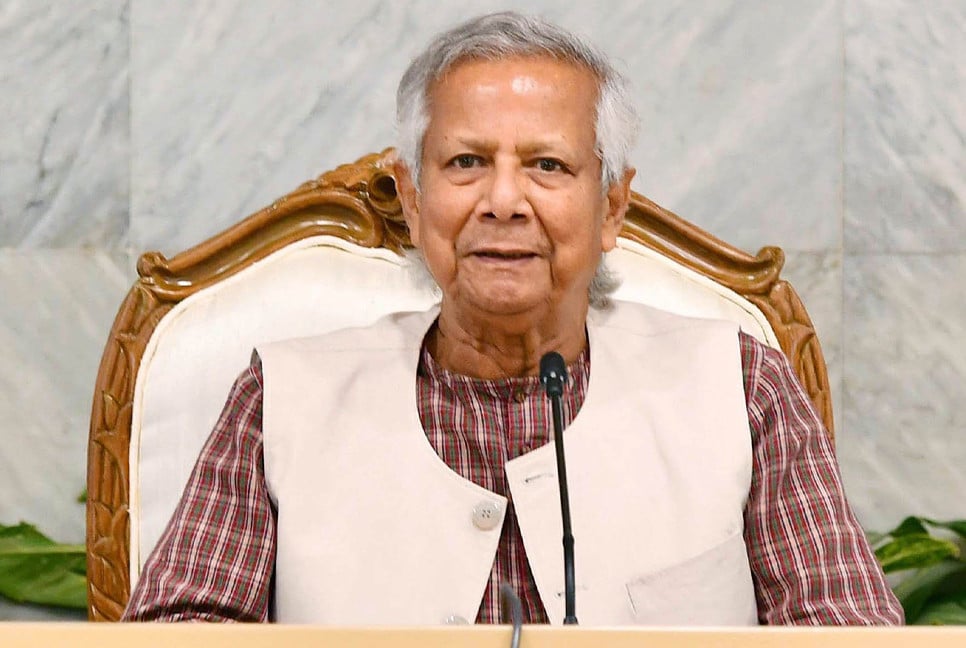
This unrest raises a fundamental question: why is the interim government—installed to guide the country out of crisis—choosing to ignite fresh fires when it was tasked with putting them out? When the interim government, led by Dr. Muhammad Yunus, was formed in the wake of the August 5 student uprising, its mandate was clear and narrow. The uprising, fueled by the July 27 massacre and decades of political dysfunction, demanded an end to impunity and a return to democratic governance. The people’s trust in the interim government rested on three foundational promises: bringing those responsible for the July killings to justice, initiating structural reforms that would allow for a democratic state to emerge, and organizing a free, fair, and credible national election.
Instead of focusing on these core responsibilities, the interim government has overreached. Rather than limiting itself to essential reforms—such as electoral and constitutional changes—it has launched a slew of committees and commissions to explore reforms on matters ranging from women’s rights to media governance and public administration. These areas are deeply political and should rightly fall under the purview of an elected parliament, not a temporary and unelected administration.
Each step beyond its limited role has pulled the government deeper into controversy. The creation of unnecessary commissions, the publication of premature reform reports, and now the introduction of a widely opposed ordinance have all added to the growing perception that this government is becoming a law unto itself. Dr. Yunus, despite his reputation as a Nobel laureate and a globally respected figure, now appears increasingly isolated from the political forces that supported the formation of the interim government. His recent call for unity among political parties and his remarks that the country is facing a “war-like” situation suggest a leadership aware of its own diminishing control.
But this war-like atmosphere, as many citizens observe, is being generated not by opposition groups, but by the missteps and overreaches of the administration itself. The decision to discuss controversial issues such as the Rakhine Corridor or to enforce policies on university structures and environmental regulations that are outside the government’s transitional mandate has only exacerbated the situation. These actions provoke backlash, deepen divisions, and make it harder to build the national consensus required for a peaceful transition of power.
Even the most generous interpretation of these actions suggests confusion and poor judgment. A harsher view would argue that elements within the government are actively seeking to derail the transition, manufacture unrest, and create grounds for prolonging their tenure. If so, it is a dangerous gamble. The interim government was created by the will of the people, but that will is not unconditional. It rests on the government remaining within the boundaries of its defined role. The mandate given to Dr. Yunus and his team was not a blank cheque. It was a limited authorization to stabilize the country and restore democracy.
It is now increasingly evident that every major protest or movement that has erupted under this government—from the NBR to the Secretariat—has been linked to policy decisions made without adequate dialogue, consensus, or legitimacy. The idea that some within the administration might be actively sowing discord to justify delays in elections or to consolidate their own influence cannot be easily dismissed. What is clear is that the people did not vote for this government. Their support came with expectations of neutrality, restraint, and responsibility.
Dr. Yunus himself acknowledged that the government’s role is to facilitate dialogue among political parties, build consensus around key reforms, and guide the country toward elections. He proposed that if a broad consensus can be achieved, elections may be held as early as June 2026. If not, then December 2025 remains the fallback timeline. Yet, this approach is undermined every time the government imposes a unilateral decision that alienates the very political actors it needs to bring together.
The current unrest is not just about a flawed ordinance. It is a referendum on the government’s broader legitimacy. The frustration of public servants echoes the sentiments of ordinary citizens who feel that promises of stability, democracy, and justice are slipping away. The July Revolution called for a new political order rooted in transparency and accountability. It demanded a government of the people—not a technocratic regime making decisions behind closed doors.
The Secretariat unrest should serve as a wake-up call. The interim government must immediately withdraw the Government Service (Amendment) Ordinance and refrain from introducing any further reforms outside the three specific goals outlined at its formation. It must return to its core responsibilities: pursuing justice for the victims of the July massacre, facilitating basic constitutional reforms based on political consensus, and organizing a credible national election.
If the government continues to disregard these priorities, it risks not only further unrest but also the collapse of the fragile trust that still remains. The interim government was never meant to chart a new political path on its own—it was meant to hand over the compass to elected representatives.
No one gave this government the responsibility to reform every aspect of statecraft. The people asked it to make way for a democratic revival. That is the only mandate it ever had. If it wants to honor the sacrifices of those who rose up in August, it must now act with humility, not hubris. The time for experimentation and overreach is over. The time for transition has arrived.
Bd-pratidin English/ Jisan