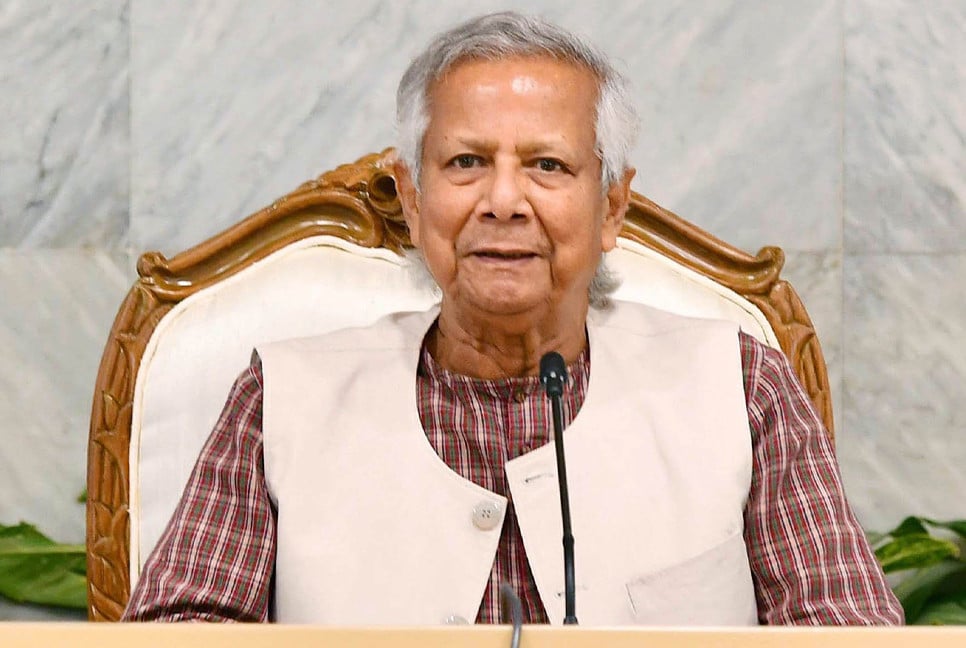
“Bhat debar murod nai, kill debar gosai’ (No means to nourish, only a mind to punish).” This old saying now mirrors the mood of a nation as Bangladesh’s interim government, under Dr. Muhammad Yunus, seemingly presides over a deliberate dismantling of the economy. Citizens are battling rampant inflation, joblessness, and deepening uncertainty. But at the heart of this unfolding disaster lies a greater tragedy: the calculated destruction of the private sector — the very backbone of Bangladesh’s economy.
The private sector drives 94% of the nation’s economic activity. It is where jobs are created, industries flourish, and innovation takes root. And yet, this sector is now under assault. Business leaders across the country report systemic harassment, baseless lawsuits, intimidation, and a dangerous lack of institutional support. One prominent business owner compared the situation to the targeted killings of intellectuals in 1971 — but this time, the victims are industrialists.
The Anti-Corruption Commission (ACC), Bangladesh Bank, and organized thugs appear to be working in eerie synchrony. Instead of promoting investment and employment, they seem to be conducting a campaign of fear. Bank accounts are frozen. Foreign travel is banned. Criminal cases — often unfounded — pile up. All while the government remains silent or complicit.
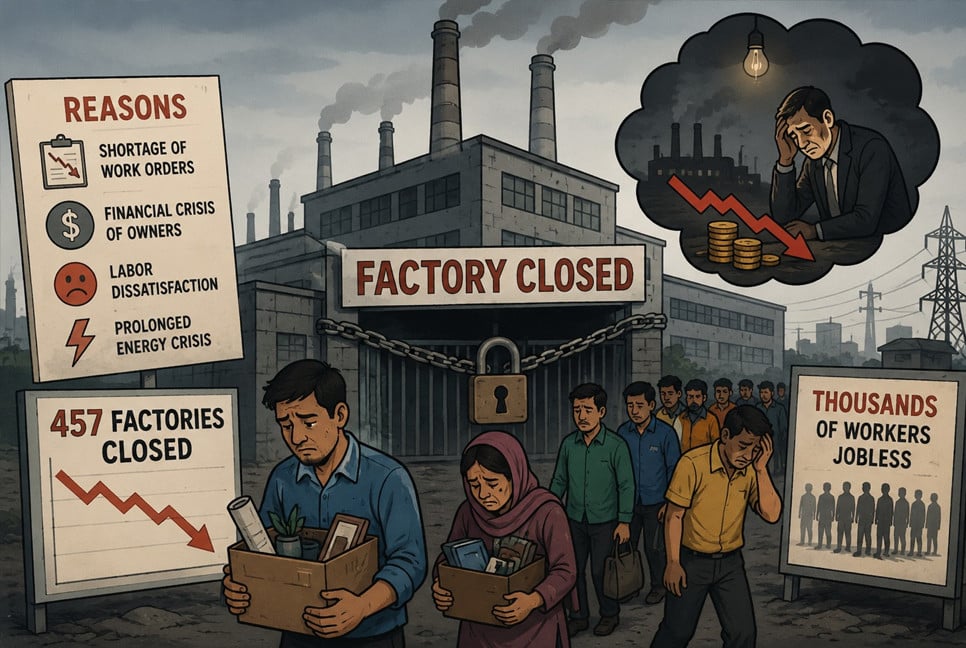
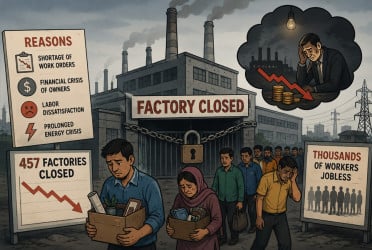
The current economic climate is bleak. A catastrophic fuel crisis has shuttered factories. Loan interest rates have soared, paralyzing even the most solvent enterprises. Imports of essential raw materials have become prohibitively expensive due to the dollar shortage. Entrepreneurs, unable to secure financing or move goods, are burning through their reserves just to stay afloat. The situation has become untenable for many.
Meanwhile, Bangladesh Bank’s policies seem designed to crush — not help — the private sector. Under the leadership of Governor Ahsan H. Mansur, the institution has become more focused on appeasing foreign donors than supporting the domestic economy. Mansur, who spent decades consulting for the IMF and World Bank, appears more loyal to their demands than the nation’s needs. In his effort to meet donor benchmarks, Bangladesh Bank has enacted measures that have destabilized industries and businesses.
The consequences are devastating. According to a recent report from the Centre for Policy Dialogue (CPD), over 2.1 million people have lost their jobs in the last six months. Women have borne the brunt of this collapse, making up 86% of those affected. With factories unable to function and unable to repay loans, they are also unable to pay workers. But instead of offering aid or restructuring plans, authorities are threatening jail time for non-payment of salaries. This perverse policy — punishing businesses unable to operate due to government failures — is unprecedented globally.
There is less production; fuel is scarce; imports are stagnant. Yet, the Ministry of Labor demands full salaries under threat of imprisonment. How can a business owner, whose factory is shut, whose bank account is frozen, and who cannot import goods or pay interest, possibly comply? The contradiction is beyond absurd — it is cruel.
Globally, when private industry faces many crises, governments step in with bailouts, subsidies, or diplomatic initiatives. The United States has repeatedly rescued industries in distress — including during the 2008 financial crash and the COVID-19 pandemic. But in Bangladesh, the opposite is happening. Here, it seems the private sector has been declared the enemy.
The bureaucracy has only compounded the crisis. Any business file submitted to Bangladesh Bank remains stuck for months. There is no urgency, no willingness to help, no interest in dialogue. All decisions are calibrated not for local impact, but to keep donor agencies satisfied. Even the recent push to divide the National Board of Revenue (NBR) has led to chaos in tax collection. Domestic revenue is already falling, yet the administration continues down this path, hoping foreign loans will fill the void.
Another dangerous policy has been the decision to let the currency float freely. With the dollar strengthening against the Taka, businesses fear the rate could soon reach 200 Taka per dollar. That would decimate local industries that rely on imported goods. No factory can compete globally or survive domestically with those kinds of costs.
Meanwhile, business owners are raising alarm bells about fuel shortages. Production lines have gone silent. But no one in authority is listening. Since August 5, traders and industrialists have been targeted systematically. Harassment has become institutionalized. The ACC sends threatening letters. Media trials follow. Bank accounts are frozen without investigation. All this has created a climate of terror across the business community.
Some of Bangladesh’s most respected industrial families have reached global prominence through decades of hard work and sacrifice. They did not rely on government handouts. They succeeded despite obstacles. But today, a full-scale war has been declared on them. It’s a deliberate, well-planned campaign to dismantle domestic industries and hand the economy over to foreign interests.
The people behind this agenda are not just misguided — they are conspirators. Their goal is clear: to make Bangladesh dependent on donor money, to weaken national industry, and to turn this nation into a perpetual debtor. Countries that have followed this path — like Sri Lanka, Greece, and Argentina — have been hollowed out, their sovereignty compromised. Bangladesh risks the same fate.
The private sector has brought Bangladesh this far. It deserves protection, not persecution. Those attempting to dismantle it — whether under donor pressure or political cover — are committing an unforgivable betrayal. The roadmap to destroy Bangladesh’s economic independence is being executed in plain sight.
This is not just mismanagement. This is a conspiracy — deep, calculated, and destructive. The time to act is now, before the damage becomes irreversible.
Bd-pratidin English/ Jisan