Over the past few days, I’ve been delving into the life and works of Chanakya, also known as Kautilya. His treatise Arthashastra, his sharp political counsel to Chandragupta Maurya, and the incredible tales of his childhood are now easily accessible in our digital age—something unimaginable even a couple of decades ago.
One scholar, while discussing the Arthashastra, revealed a fascinating anecdote: as a child, Chanakya’s parents broke a few of his teeth. The reason? He had a full set of 32 teeth, and in ancient Kerala—some 2,400 years ago—this was believed to be a sign that the child would become a king. But his parents didn’t want him to become royalty. They feared that a king would lack human empathy and prioritise the throne over his own parents. Ironically, Chanakya rose to a level where intellect, strategy, bravery, diplomacy and fortune fused into one, making him the kingmaker of his time—still a wonder to the world.
The Arthashastra, his legendary work, is essentially a timeless constitution, a Bible for rulers and a charter of liberation for the people. Chanakya named it so because the state’s every action is intricately linked with economics. If state policies do not ensure mutual gain for both state and citizens, collapse is inevitable—both for the kingdom and its ruler.
Before focusing on the state’s revenue, Chanakya emphasised ensuring that the people could earn first. Only after satisfying their basic needs, comforts, and desires would they be willing to pay taxes. Economic disparity, he believed, is the root of war, rebellion, theft, and social unrest. Thus, he placed paramount importance on espionage—to keep track of the people’s financial conditions and moods. He divided the Mauryan Empire’s intelligence into 79 departments, offering high pay and rigorous training to ensure elite performance.
The success of Mauryan intelligence remains a benchmark for modern spy agencies. The vast, united India created under Chandragupta, Bindusara and Ashoka was unparalleled. If someone in a remote village suddenly became rich, a detailed report would be sent to the emperor. Likewise, if a rich man fell into poverty, the reasons and societal consequences were swiftly relayed to the throne. Based on such intelligence, immediate corrective actions were taken to avoid economic chaos and ensure social cohesion.
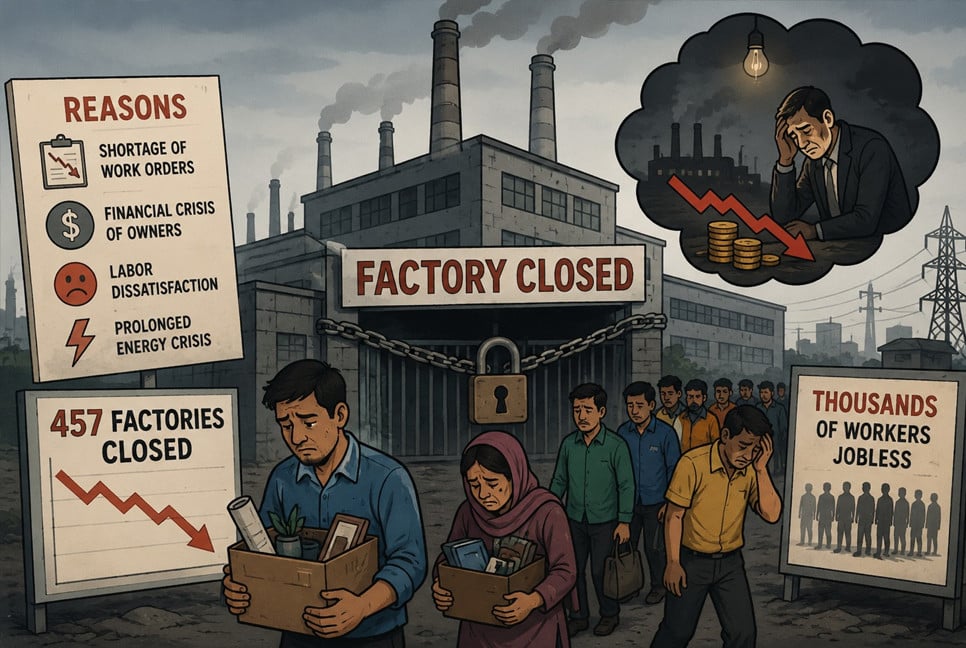
While exploring this incredible system online, I stumbled across something much more disturbing: an audio clip circulating on social media of a thug named Riyad from Narayanganj threatening a businessman. Claiming affiliation with a major political party, he verbally abused the man and threatened to burn down his garment factory—boasting that he had already set fire to several others simply because the owners had “shown attitude.”
The AI algorithms soon began feeding me a barrage of similar clips—harrowing stories of extortion, assault, and destruction across Barisal, Patuakhali, Chattogram, Sylhet and even in Dhaka’s commercial areas. At that point, the noble teachings of Chanakya vanished from my mind and pain gripped my stomach. My heart ached at the brutality of the state and the helplessness of its citizens.
One recent night, a young entrepreneur I know called from Bangkok. “Bhaiya,” he said, “I barely escaped with my life.” His late father had been a six-time MP from the ruling party. But after his death, the party nominated someone else. Out of favour, the family soon found their business targeted by a powerful financial godfather from the same party—first trying to seize control, then unleashing state agencies and a private bank to destroy them.
The business was shuttered. After the regime change, the young man tried to reschedule his loans, selling off his remaining assets to rebuild. But then disaster struck again.
While dropping off his wife—a doctor—at her workplace one evening, around 8 pm, he was blocked on the Mahakhali flyover by a swarm of 30–35 motorbikes. They tried to drag him to the police station. “What have I done?” he asked. “Doesn’t matter,” they said. “We’ll file a case against you at the station—then you’ll see.”
He and his wife were terrified. No one stopped to help. Inside the locked car, he frantically called political leaders and government officials, invoking every name he could think of. The gang mocked and insulted them all. They threatened to smash the car and abduct the couple. Finally, the man asked, “Is this about money?” They demanded 50 lakh taka.
Unable to arrange that on such short notice, he offered to go to an ATM and withdraw whatever he had on his credit card, promising the rest in a few days. The gang, having thoroughly surveilled his life and business, were confident he wouldn’t flee. So they agreed.
That night, he withdrew the full balance from his credit card and handed it over—just to save his life. Then he fled straight to the airport and left the country with only the clothes on his back.
In his absence, his business again fell into crisis. The bank, despite renegotiated terms, began preparing to file fraud charges for dishonoured cheques. As he narrated this over the phone, I couldn’t help but recall Chanakya’s principles and how far our current reality has strayed.
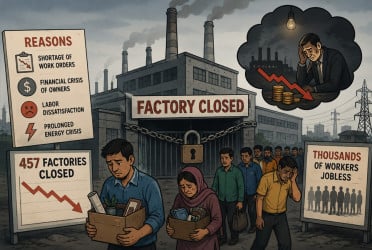
If you want to witness this reality for yourself, visit the markets, factories, neighbourhoods, and alleyways of Bangladesh. From street sweepers and rickshaw pullers to elite business families, the cry is the same. Though the state’s intelligence agencies and rulers may not hear it, the rest of us can clearly sense how poverty, hunger and despair are engulfing the people.
And so it appears—God alone is now running the country. Like the celestial caretaker of the universe, Allah is the only one keeping balance in nature, while His appointed “khalifas”—the leaders—fail their duties. While God distributes sustenance with divine equity in forests, mountains and oceans, here, in His name, criminals loot and destroy the livelihoods of 180 million people.
Just like how ants or insects swarm to honey, devouring it with no regard for balance, so too do the human vultures of today descend upon public wealth. They don’t just taste the honey—they ravage the hive, devour the wax, and burn the tree.
The author is a former Member of Parliament and political analyst.