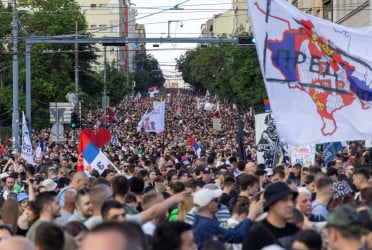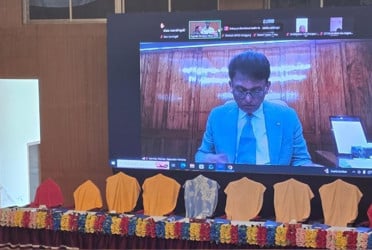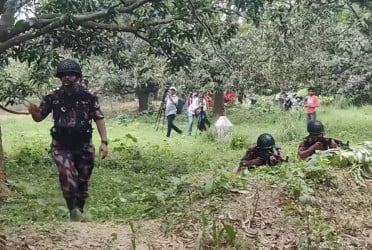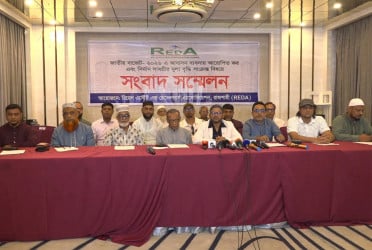
The capital is paralysed by protests. One movement ends only for another to begin, plunging Dhaka into continuous gridlock. In a recent three-day protest, the government conceded to all the demands of Jagannath University students and teachers. Yet while demands were fulfilled, ordinary citizens endured immense suffering. Dhaka University remains tense over the Samya killing. Meanwhile, supporters of Ishraque Hossain continue their sit-in at Nagar Bhaban demanding his appointment as Mayor. There is hardly any good news anywhere. People are exhausted and frustrated. How much longer can this go on? When will peace return?
Political leaders sense conspiracy in the air. A catastrophe looms. In the political sphere, rifts and mistrust are deepening among parties that were once united in the July revolution.
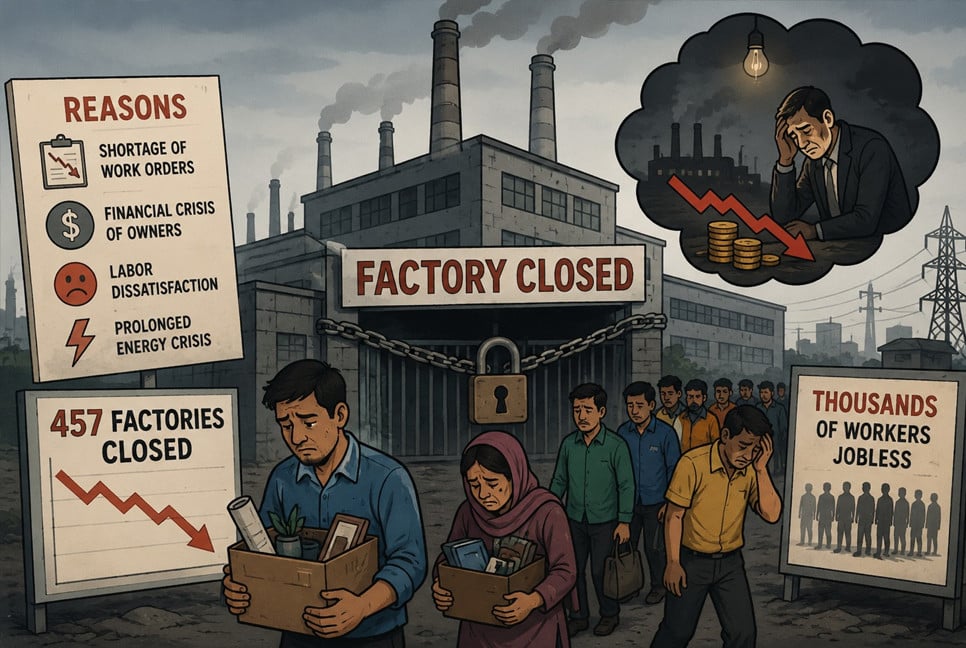
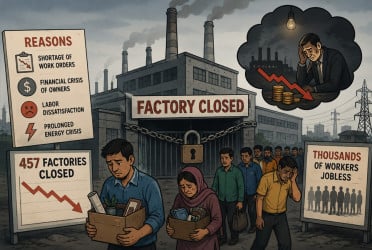
For the past nine months, Bangladesh has become a battleground of demands from various sectors and professions. From work stoppages to strikes, from protests to sit-ins, every day brings new disturbances in educational institutions and beyond. Public life has descended into chaos. The economy has become crippled. The country is virtually at a standstill. The public is exasperated.
The crisis is intensifying, slowly slipping out of control. An urgent resolution is needed, and the only way forward is to hold national elections without delay. No interim government, no matter how well-intentioned, can possibly meet this mountain of demands. Attempting to do so only breeds further complications—as we are already witnessing. Only elections can deliver us from this gridlock. Power must be returned to elected representatives—this is the demand of the hour.
Why is an election the solution? Let’s examine this carefully. At present, professionals and university communities are staging protests across the country. Once an election schedule is announced, political parties will be compelled to state their positions on these demands. They will make specific pledges—who will do what if elected. These promises will offer clarity and assurance to protesters. Movements will begin to calm. Protesters will recognise that the interim government’s sole task is to oversee the election. Everything else will be in the hands of the elected government. They will wait. And after the election, the winning party will be held accountable for its campaign promises.
In this way, only through the democratic transfer of power can the protests be controlled and normalcy restored. The longer elections are delayed, the more new issues and demands will emerge. Those long deprived will see the uncertain political window as their only chance to push for justice. The mountain of demands will grow, and the government will be distracted from its core responsibilities.
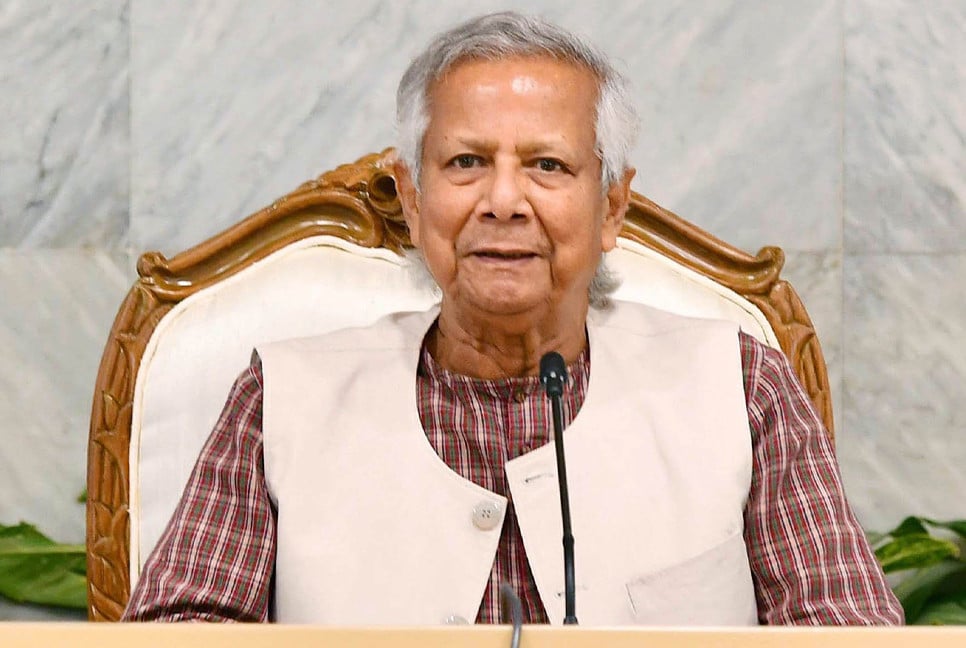
Let us not forget: this is an interim government. It has three clear mandates. Its job is not to rule indefinitely. This has been stated numerous times by Chief Adviser Dr Muhammad Yunus.
The first task is to deliver justice for the July massacre. That process has begun—charge sheets have already been filed against Sheikh Hasina and others. The trials are underway and must proceed independently. No one should interfere. The UN Human Rights Commission has already submitted a landmark report on the massacre, which can serve as an international foundation for justice. The process must be left to unfold impartially.
The second responsibility of the interim government is to lay the groundwork for structural reform and establish a framework for accountable governance. For this, Dr Yunus wisely formed several commissions—including those on constitutional and electoral reform. Most political parties have responded positively, and discussions based on these commissions' recommendations are already underway.
Crucially, a National Consensus Commission has been formed to create unity and avoid post-election division. This commission is tasked with drafting the "July Charter", a historic document outlining the principles of future governance. All political parties will sign it, making it a national pact. Encouragingly, most parties are in agreement on major reforms. However, some within the commission seem to be stalling. This is not the time for delay. The July Charter must be finalised quickly.
It should also be made clear that sensitive reform issues—such as media, gender, or civil service reforms—are beyond the remit of the interim government. These must be left to an elected government. Controversies have already arisen over these topics. For now, let the focus remain on key areas such as constitutional and electoral reform. These are the pillars of the July Charter.
Once the Charter is finalised, the interim government’s only job should be to declare an election roadmap and guide the nation to the polls. Any delay in doing so will fuel public suspicion that the interim government seeks to prolong its stay. This sentiment is already gaining ground among political parties and citizens alike.
We must remember that the interim government derives its legitimacy from the support of all political parties. It was formed to conduct a free and fair election. Without continued support, it cannot succeed. The strength of the July revolution was national unity. Political parties set aside their differences and stood together. Maintaining that unity is the responsibility of Dr Yunus and his government. Thus, any ambitions or delays related to the election process will be deeply counterproductive. Such actions risk eroding public trust and provoking resentment among political parties—something we are already beginning to see. The "humanitarian corridor" issue is one such example. Parties like BNP and Jamaat have openly opposed the unilateral implementation of this policy without consensus.
Therefore, the interim government must avoid controversial decisions that risk undermining national unity. A temporary government remaining in power too long sets a dangerous precedent. It will inevitably lose the overwhelming support and unity it once enjoyed.
Most importantly, swift elections are needed to prevent the return of fascism. Though the interim government has banned the Awami League until trial verdicts are reached, international observers are watching closely. Despite the ban, fascist elements are plotting in new ways. For over 15 years, they looted public wealth and stashed billions abroad. With these resources, they can easily destabilise the nation again.
Conspiracies are brewing in many corners, aiming to destroy the achievements of the revolution. The longer elections are delayed, the more these threats will grow. New crises will emerge. Public confidence in the revolution will wane. If delays persist, people may grow disillusioned and declare the revolution a failure. Is that the path we want to follow?
The people of Bangladesh are, at their core, believers in democracy. They want an elected government and a return to normalcy. That path can only begin with an election grounded in national consensus.
Author: Playwright and Columnist
E-mail: [email protected]