The local garments industry have already been undergoing through the aftermath of extra tax imposed by Trump administration. The buyers have imposed extra 2 to 5 percent tax on their orders. The amount of tax for some companies have surpassed over million dollars, according to the sources. The people concerned thinks the purchase orders from the garments industry might be reduced if the present situation is persisted.
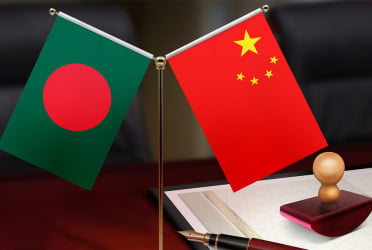
Donald Trump announced the imposition of a 37 percent tariff on goods imported from Bangladesh, along with other countries, in an executive order on April 2. Later, in response to a letter from the interim government's chief advisor, Professor Dr. Muhammad Yunus, the country suspended the decision for three months, but maintained the additional 10 percent tariff. Now, that 10 percent tariff is being imposed on the country's garment industry.
Mohammad Hatem, president of the knitwear sector organization BKMEA, told The Bangladesh Pratidin, "Although the Ministry of Commerce is continuing discussions with the US Department of Commerce USTR; however, buyers in the US market are already imposing the responsibility of paying the tariff on us. Out of the 10 percent tariff that is in place in addition to the existing tariff, some factories are being imposed a tariff of 5 percent, some 3 percent, and some 2 percent."
He said that garment factories are also being forced to pay the imposed tariff to retain purchase orders. The BKMEA president also said that due to Trump's tariff announcement, a ready-made garment industry company in Chittagong alone had to pay an additional duty of 2.4 million US dollars, which is about Tk 290 million in local currency.
According to the Office of Textiles and Apparel (OTEXA) under the US Department of Commerce, Bangladesh exported ready-made garments worth 2.22 billion dollars to the US in the first three months of this year (January-March). This is 26.64 percent more than the same period last year.
Bangladesh has the highest growth among the top 10 ready-made garment exporting countries in the US. Export data for April is not yet available. Garment owners are concerned about the volume of exports to the country's market after the imposition of tariffs. Those concerned also fear that garment exports to the US may decrease if the additional tariffs continue.
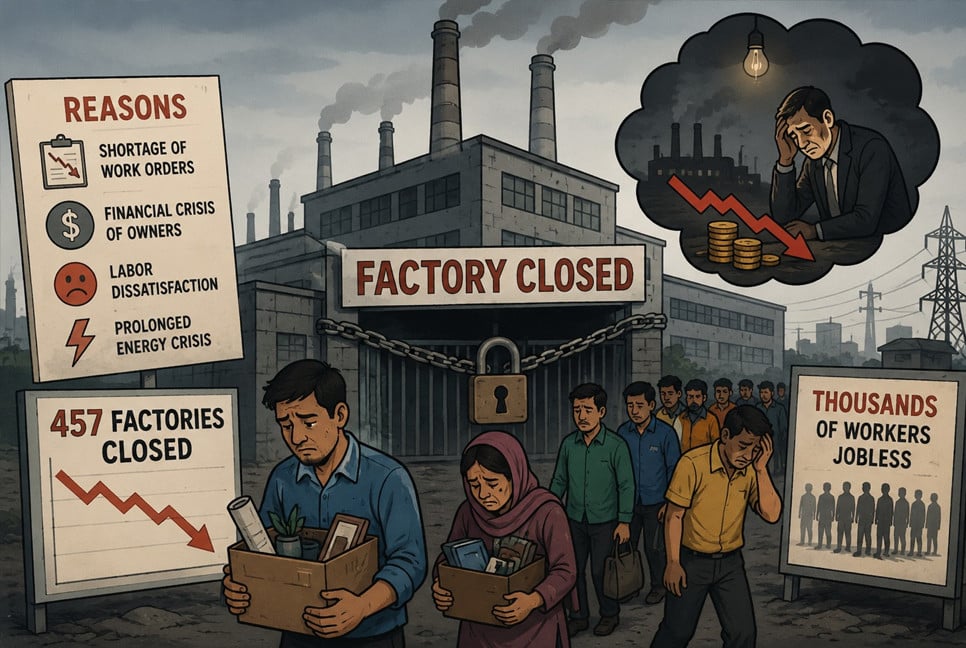
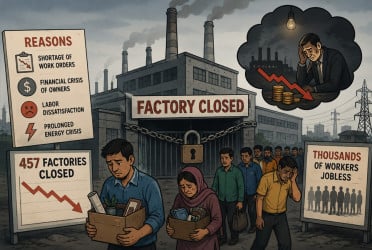
Entrepreneurs in the garment sector said that the ready-made garment sector is already under pressure due to various issues including political uncertainty, gas-power crisis, and labor protest. The purchase orders have also decreased due to rising inflation in Western countries. Now they fear that the additional tariff pressure in the US market will negatively affect the production of garment factories.
Former BGMEA president and Bangladesh Chamber of Industries (BCI) president Anwar-ul Alam Chowdhury Parvez said that although discussions are ongoing at the government level, no one knows what the new tariff will be after the three-month moratorium is lifted. A survey in the country has said that if Trump's tariff is implemented, ready-made garment sales at the retail level in the United States will decrease by 32 percent. This is because if the retail price of the product increases due to the tariff, consumers will reduce their purchases of clothing. And if retail sales decrease, Western buyers will also cut their orders. As a result, this may negatively affect the production of the garment industry in Bangladesh.
(Translated by Lutful Hoque)
Bd-pratidin English/Lutful Hoque