Politics remains caught in a cycle of hope and despair. One side is desperate for elections, while the other insists elections can only happen after comprehensive reforms. Amid this back-and-forth, attention has shifted from the economy and trade, which are currently facing a critical period. Most of the key economic indicators are stagnant, if not worsening.
The country is, arguably, on the brink of crisis. Due to a slump in imports, trade, and investment, there is a major shortfall in revenue collection. To curb inflation, high interest rates have been imposed, which is stifling credit flow to the private sector. The high price of the dollar has led to currency devaluation, and skyrocketing prices of gas, electricity, and fuel have increased the cost of doing business.
Without notable improvements in law and order and amidst a general lack of confidence, both domestic and foreign investment have dried up. The stock market is in disarray, with individual investors devastated as they watch their savings vanish day after day. Essential commodities are also caught in a volatile and syndicate-controlled market.
Low-income groups are struggling just to survive. Large industrial groups — previously leaders in investment and job creation — are now entangled in legal scrutiny and regulatory pressure, causing stagnation across multiple sectors. Entrepreneurs and business leaders are increasingly directionless and disillusioned.
In recent conversations with many top business leaders, the prevailing mood has been one of disappointment rather than hope. They had expected the interim government — formed through a transition of power responding to public demands — to stabilize the economy and drive it toward high growth. While efforts by the government over the past nine months are visible, including maintaining remittance flow and stabilizing reserves, the economy as a whole has yet to return to the right track. In some areas, the situation has even deteriorated further.
Business leaders say a genuinely business- and investment-friendly environment still hasn’t been achieved. Law and order remains fragile. Labor unrest continues in factories. Acts of arson, vandalism, and mob violence frequently target industries and businesses. Even during the recent investment conference, several foreign brand outlets were attacked. The import controls implemented during the ousted Awami League government to protect dollar reserves still affect trade. To reduce money circulation and fight inflation, interest rates were repeatedly increased — a policy the current central bank governor has continued. This has severely disrupted credit flow in the private sector.
Negative signals have also been sent through campaigns targeting 10 weaker banks. Legal actions against several major industrial groups have added to the uncertainty. Meanwhile, gas prices have been hiked multiple times — the latest being a 33% rise for new investments. Already plagued by insecurity, entrepreneurs have essentially paused operations in response to these increases. With local investors pulling back, foreign investment has also stalled, deepening the investment crisis.
Even a glance at Bangladesh Bank’s import data reveals the scale of the problem. From July to February, imports of capital machinery and equipment fell by almost 30%. This means no new investment is taking place. While lower imports may seem to save dollars and boost reserves, the economic impact is negative. Without machinery, there are fewer job opportunities, and unemployment rises. The World Bank has also recently warned that another 3 million people in Bangladesh may fall into poverty.
In an emerging economy, low imports and lack of investment trigger far-reaching damage. Without employment, income falls. Lower income reduces purchasing power. Even if this helps slightly reduce inflation, it also reduces monetary flow — lowering consumer demand and reducing government revenue. Currently, the government is facing a revenue shortfall of BDT 65,000 crore. The main reasons: reduced customs from lower imports, less VAT from reduced trade, and lower income tax from shrinking individual incomes.
Due to this shortfall, government spending has been cut. Development project allocations have shrunk, and budget reductions are necessary. This hits rural income and demand, leading to lower productivity. Import restrictions also disrupt production.
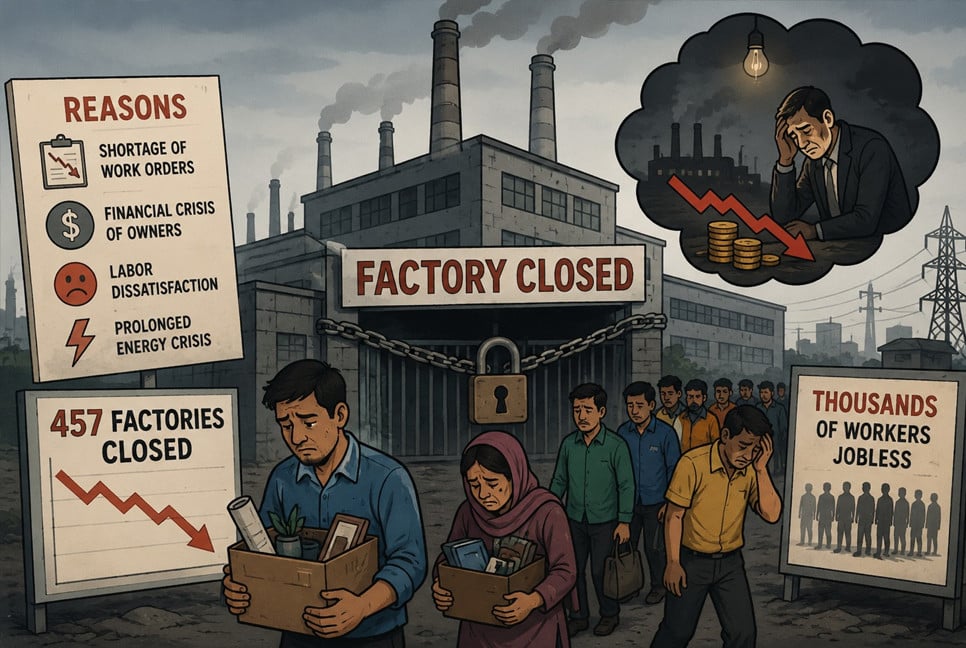
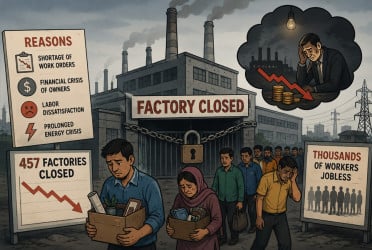
Recently, top leaders of major trade bodies held a press conference and issued a joint statement through the media, highlighting the dire state of business and investment. In a report published in a national newspaper, BGMEA, BTMA, BKMEA, and BTMA leaders said that even after paying high prices, they are not receiving adequate gas supplies. This severe gas crisis is threatening the very existence of their industries. Many export-oriented garment and textile factories have already shut down, and others are on the verge. They fear that if this continues, it will become increasingly difficult to retain foreign purchase orders. Despite sending repeated letters to the highest levels of government, they claim no effective response has been given. These sectors contribute around 85% of the country’s export earnings. Though they should be prioritized for gas supply, this hasn’t happened. Around $70 billion worth of investment in the garment sector is now under threat. Entrepreneurs worry that if their industries fail, it could even endanger the country’s foreign reserves.
Another key pillar of the economy — the capital market — also shows no signs of hope. For months, retail investors have been losing their capital and protesting regularly, but the market remains unresponsive.
In short, the economy is under significant pressure. From discussions with entrepreneurs and business leaders, one thing is clear: the government must now set its priorities straight. On one hand, it needs to stabilize the currency market and reduce interest rates and utility prices to revive investment; on the other, it must engage directly with private entrepreneurs, prioritize their needs, and listen seriously to the challenges they face. Based on those challenges, practical policies and strategies should be developed.
Almost all sectors agree that restoring economic momentum should be one of the government’s top priorities. Earning the trust of all levels of entrepreneurs is equally critical. The government must ensure law and order, uninterrupted supply of gas, electricity, and fuel, liberalize import policy, reduce interest rates to boost credit flow, bring down the dollar exchange rate to a tolerable level, and offer support policies for loan repayments. It must also consider relaxing IMF-imposed rules that push for harsh loan default classifications, and avoid harassing businesses with excessive surveillance, legal action, or penalties.
In essence, all these measures should be government priorities right now. Above all, the government must ensure employment and income opportunities grow across the economy — no matter the cost. If needed, a special task force can be formed to draft an emergency action plan for the economy. The government can begin implementation based on its recommendations.
Bd-pratidin English/ Afia