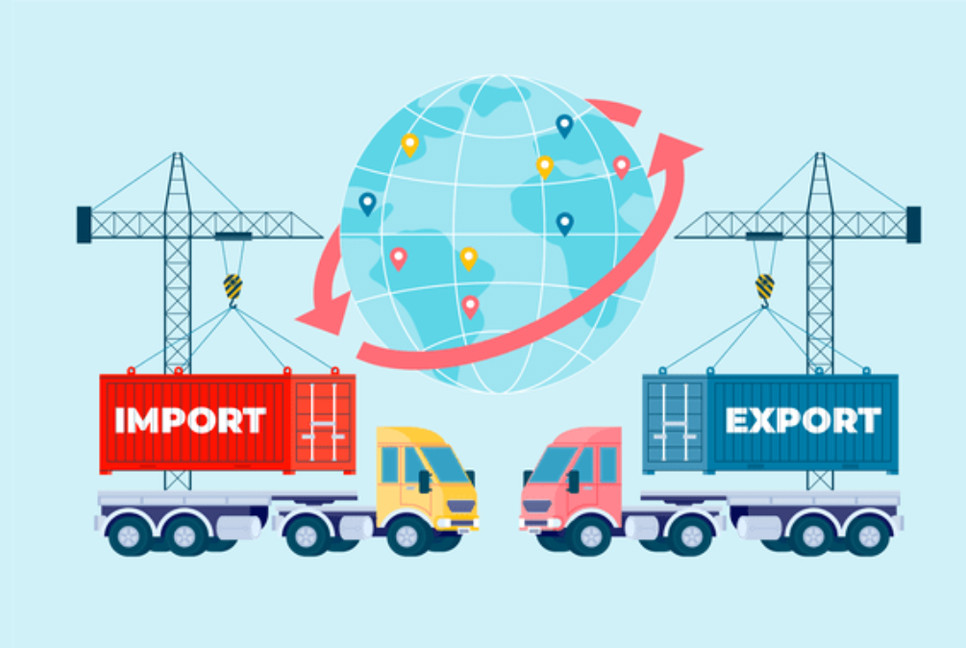
The country’s industrial sector is paying a high price for the effort to curb imports. To stop the decline in foreign reserves, the central bank imposed restrictions on imports, which continued for a long time. As a result, the import of capital machinery, industrial raw materials, and intermediate goods has declined. This essentially means that investment is decreasing.
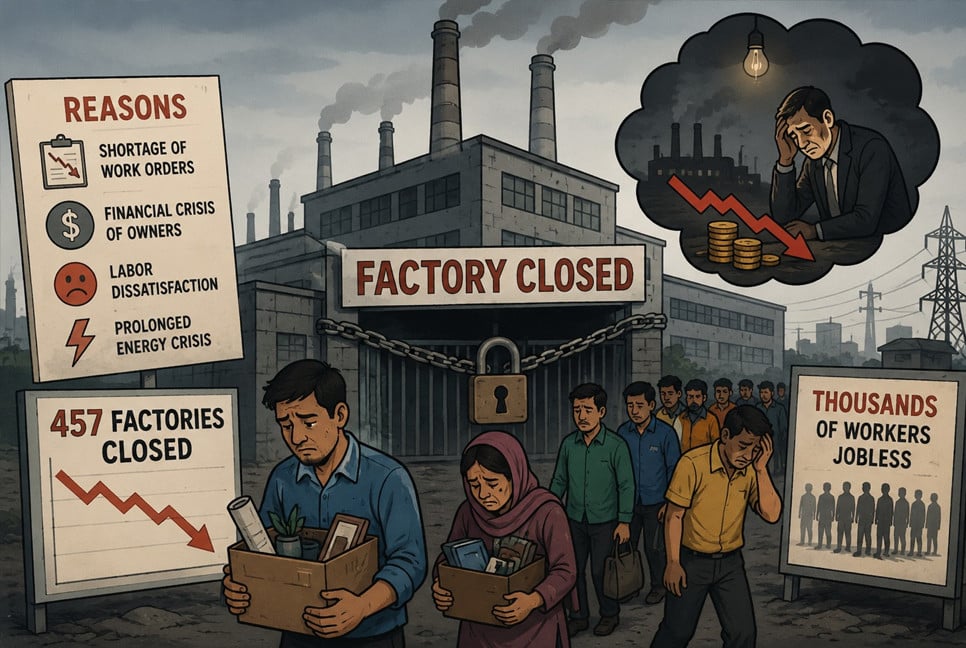
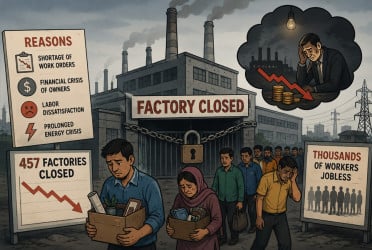
Entrepreneurs say that trying to control the dollar market by reducing imports has backfired economically. Due to the dollar crisis, many factories cannot import raw materials or ensure uninterrupted energy supply, even at high costs. As a result, some factories have shut down, while others are operating at half capacity. Even good borrowers are turning into defaulters as they fail to repay loans on time.
The private sector is facing a deep crisis under such circumstances. GDP growth, revenue collection, investment, and employment—all are on a downward trend. Due to the stagnation in business and trade, the government is losing revenue. Analysts consider the situation alarming for both the public and private sectors.
Anwar-ul-Alam Chowdhury Parvez, President of the Bangladesh Chamber of Industries (BCI), said: “The drop in capital machinery imports is due to ongoing uncertainty. Law and order have not improved significantly, there’s no energy security in factories, and interest rates on bank loans have increased from 9% to 16%, making businessmen reluctant to invest. The current situation provides no comfort for entrepreneurs. There’s no reason to invest in such an environment. No one will invest amid uncertainty. Entrepreneurs are in a deep crisis just trying to maintain their existing businesses.”
Masrur Reaz, Chairman of Policy Exchange Bangladesh, a private think tank, said: “The decline in capital machinery imports and private sector credit growth is concerning for our private sector-based economy. Investors have delayed expanding their current businesses or launching new ventures. The main reason is that high inflation has affected domestic demand and purchasing power. Until November last year, imports were strictly controlled. Although overall import conditions have somewhat improved, capital machinery, raw materials, and intermediate goods imports have not returned to previous levels. Following the political upheaval in August, investors are in a wait-and-see mode. Entrepreneurs are uncertain about when and how power will be handed over to a democratic government. Without that certainty, long-term investment won’t come.”
According to the latest data from Bangladesh Bank, imports in February amounted to $5.941 billion. However, in the first eight months (July–February) of the 2024–25 fiscal year, total imports stood at $46.458 billion, compared to $44.108 billion in the same period of the previous fiscal year—a 5.33% increase year-over-year.
Capital Machinery Imports Decline by 26.02%
While the central bank published import data up to February, it released data on LC (letter of credit) openings up to March. The analysis shows that although LCs for consumer goods rose due to increased demand during Eid, LCs for capital machinery dropped by 26.02%, and LC settlements fell by 28.68%. LC openings for intermediate goods decreased by 1.61%, settlements by 7.51%, and petroleum LC openings by 3.83%.
Private Sector Loan Growth Hits 21-Year Low
In February, private sector loan growth fell to 6.82%—the lowest in 21 years. According to Bangladesh Bank, loan growth hasn’t been this low since February 2004.
If capital machinery imports fall, investment will decline further, ultimately affecting employment. Business leaders and economists fear this will slow down the overall economy even more. They also emphasize that political stability is urgently needed to resolve the crisis.
Employment Growth Slows
Within a year, the number of unemployed people has increased by 170,000. According to the third quarter (July–September) 2024 Labor Force Survey by the Bangladesh Bureau of Statistics (BBS), there are currently 2.66 million unemployed people in the country. In the same period of 2023, the number was 2.49 million. As of September, 1.79 million of the unemployed are men, and 870,000 are women.
BBS states that the current labor force stands at 59.18 million, down from 61.15 million in the third quarter of 2023—a decrease of 1.95 million. Of the total labor force, 56.52 million are employed; the rest are unemployed.
GDP Growth Falls to 4.22%
The country’s GDP growth has dropped to 4.22%. Previously, it was estimated that growth would fall to 5.82%, but the final figure is even lower. The final estimate for the 2023–24 fiscal year, published by BBS, attributes the decline to factors such as banking sector fraud, continued capital flight, and revised export income data.
Revenue Shortfall Exceeds Tk 65,665 Crore
In the first nine months of the 2024–25 fiscal year, the revenue shortfall exceeded Tk 65,665 crore. The original target for revenue collection was Tk 4.8 trillion, later revised to Tk 4.635 trillion. Based on this, an average of Tk 1,270 crore needed to be collected daily throughout the year. However, due to the large shortfall in the first nine months, this target has become even more challenging to meet.
Javed Akhtar, President of the Foreign Investors' Chamber of Commerce and Industry (FICCI), said: “If business grows, revenue will naturally increase. But the current business environment is difficult. There needs to be a focus on simplifying customs services and improving direct tax collection.”
Due to the decline in business activity, people’s income has been affected. Alongside this, the creation of new employment has decreased. Economic adviser Salehuddin Ahmed recently said: “The reduction in infrastructure construction and various projects is a key reason. However, the government is trying to revitalize business and trade. People are suffering, and new employment opportunities are essential.”
Former director of the Bangladesh Garment Manufacturers and Exporters Association (BGMEA), Mohiuddin Rubel, told Kaler Kantho: “There is no alternative to increasing investment for economic growth. If the cost of doing business is reduced, investment will increase. Businesses must be given the assurance that returns will come from investments. Gradually, improvements are being made in banking and law enforcement. Entrepreneurs need to be assured that the business environment will get better in the future.”
Bd-pratidin English/ Afia