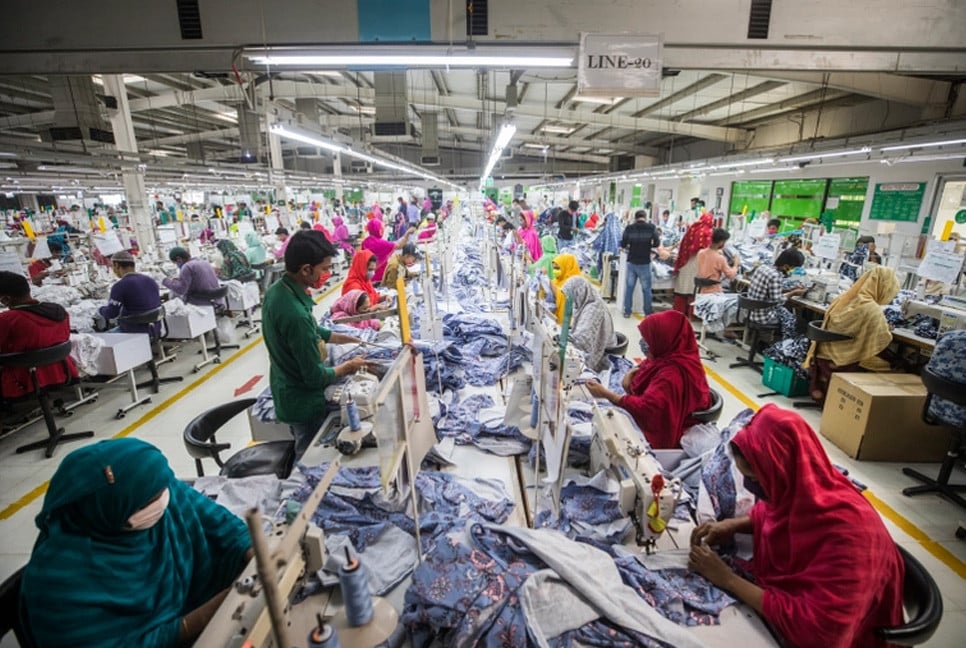
The top three organizations in the garments sector are in a two-sided position as the government has suspended yarn imports through land ports.
Though the decision made the textile mill owners happy, two other organizations in the garments sector—Bangladesh Garment Manufacturers and Exporters Association (BGMEA) and Bangladesh Knitwear Manufacturers and Exporters Association (BKMEA)—oppose it.
According to BGMEA and BKMEA, the production cost will increase further if the yarn imports via land ports are stopped. Also, it will be a challenge for the companies to deliver products on time.
Hence, small entrepreneurs will be affected, said the two organizations’ authority.
On the other hand, the Bangladesh Textile Mills Association (BTMA) said that the decision will strengthen the backward linkage industry, stop money laundering, and increase the government’s revenue.
In response to BTMA’s demand, the government banned yarn imports from India via land ports.
A week earlier, on April 13, the National Board of Revenue (NBR) issued a notification in this regard.
BTMA said while showing positive approaches to the decision, “The backward linkage industry will be strengthened, money laundering through hundi will be stopped and government revenue will increase.”
The organization clarified that the NBR will have exclusive control over imports arriving through seaports.
On contrary, the BGMEA in its budget proposal submitted to NBR demanded that yarn continue to be imported via Benapole land port.
In its written proposal, BGMEA stated that there is no room for irregularities in the use of yarn imported through land ports under bond licenses.
BKMEA President Mohammad Hatem said, “Such a decision should have been made in consultation with all stakeholders.”
“Due to the decision, readymade garments (RMG) export will be hampered,” he expressed his fear. “Small factories will be in danger.”
He said, “The BTMA has complained that we bring three trucks of yarn by making an LC for one truck. This is never possible.”
“Is our customs or the customs in India so inefficient that this is happening?”
Additional managing director of Denim Expert Ltd and former director of BGMEA Mohiuddin Rubel said entrepreneurs of small and medium garment factories import yarn from India by road as they are not capable of bringing a huge amount of yarn by Sea.
“They do not have that capacity and demand. They also cannot bring yarn by sea by making long-term investments,” he added.
“The lead time (time) to bring yarn by road is less than via sea,” He said, adding, “Purchasing yarn from the local market will develop our own country's industry.”
We also want our capacity to increase, and local capacity to increase further. However, the price must also be competitive. If the price is too high, the industry will lose its competitive ability. In this case, if the government provides subsidies, it will be good for the industry.
Bd-Pratidin English/ AM