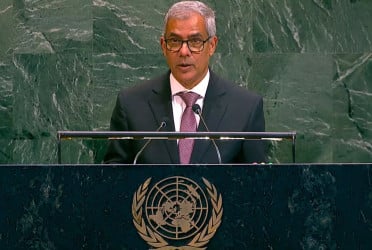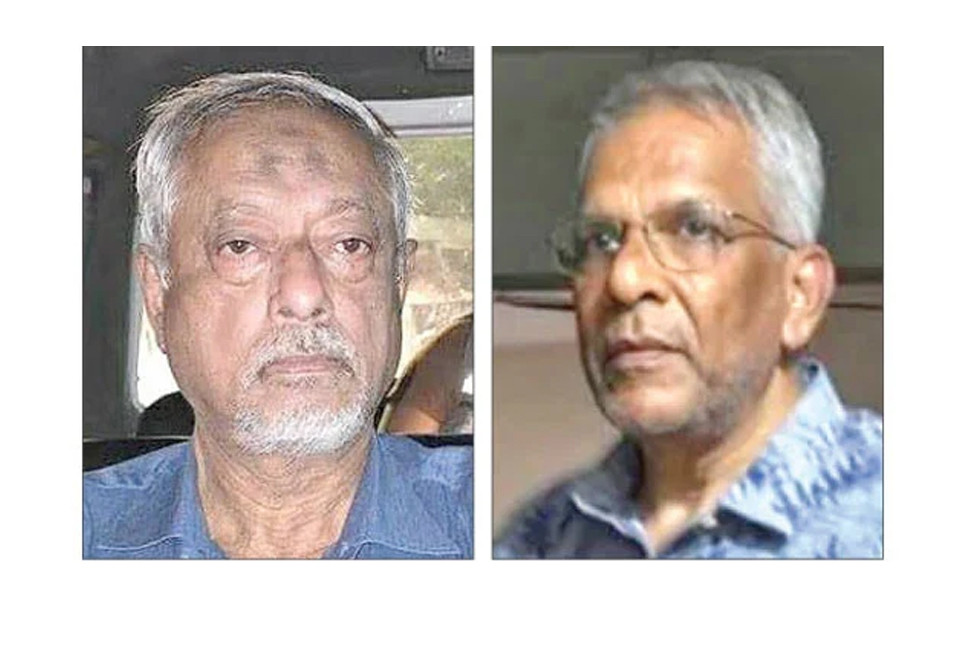
Lt Gen (Retd) Mamun Khaled, former chief of DGFI, has begun to speak out. After a continuous 15-day remand, he was placed on a fresh three-day remand last Thursday. According to sources within the investigating team, during interrogation, Mamun Khaled has provided detailed information regarding the conspiracy of 1/11, its primary architects, and its ultimate goals. Intelligence officials are currently verifying the information provided by Mamun.
Intelligence sources say that Mamun Khaled named eleven powerful individuals involved in the 1/11 shift. The former military officer claimed he was not a conspirator of 1/11 but rather an implementer. Citing the military chain of command, he stated that there is no alternative to obeying the commands of superior officers in the Army. Mamun claimed he was transferred to the DGFI mid-way through the 1/11 period. Initially, he joined as Director of Media; later, when the Fakhruddin government announced the election roadmap, he was promoted to Director General of DGFI.
Mamun Khaled stated that several advisors in the Fakhruddin government, including the Chief Advisor, were advisors in name only – they were puppets. He claimed that while managing the media, he observed a “Core Group” led by the then Army Chief, Moeen U Ahmed, which actually ran the 1/11 government. Mamun asserted that Moeen would hold meetings with them at the Army Headquarters for hours. According to him, these meetings decided the minutiae of how the government would function, who would be arrested, and against whom news reports would be published. These decisions were then implemented by the caretaker government.
When asked by investigators who were in this core committee, Mamun named: General Moeen U Ahmed, General Masud Uddin, Brigadier Bari, Brigadier Amin, General (Retd) Hasan Mashhud Chowdhury (then Chairman of the Anti-Corruption Commission), Brigadier Sakhawat Hossain (then Election Commissioner), Ali Imam Majumder (then Cabinet Secretary), Badiul Alam Majumder (Executive Director of SHUJAN), Matiur Rahman (Editor of Prothom Alo), Mahfuz Anam (Editor of The Daily Star), Fahim Munaim (Press Secretary to the then Chief Advisor),
Notably, Fahim Munaim served as the Managing Editor of The Daily Star before becoming the Press Secretary. Mamun stated that the late Fahim would determine what should be written and when against any politician or businessman.
During interrogation, Mamun mentioned that based on his experience in those meetings, he believed the entire 1/11 plan was drafted by the two editors in the core committee. When asked how he reached this conclusion, Mamun said that in every meeting he attended, Moeen would first ask the two editors, “Tell us, what should we do?”
Recalling one such meeting, Mamun said the editor of the Bengali daily proposed the arrest of Tarique Rahman and the two leaders (Sheikh Hasina and Khaleda Zia). The editor of the English daily agreed. Mamun claimed that most members of the core committee initially opposed these arrests, arguing that it would be difficult to handle the resulting situation. However, Matiur Rahman and Mahfuz Anam presented various arguments in favor of the arrests. They both claimed that unless these three were removed from politics, no political reform in Bangladesh would be possible.
Mamun claimed that it was decided in that meeting to create public opinion before arresting the two leaders and Tarique Rahman. The two editors and the Press Secretary took responsibility for this. Subsequently, the editor of Prothom Alo wrote a commentary on the front page under his own byline titled “The Two Leaders Must Go”.
Mamun further claimed that the plan to split political parties was also devised by the two editors. According to him, Matiur Rahman had a long-standing relationship with Abdul Mannan Bhuiyan, the then Secretary General of the BNP, as both were involved in leftist politics. Leveraging that relationship, Matiur Rahman played a role in convincing Mannan Bhuiyan to support “reforms.” Immediately after 1/11, Prothom Alo and The Daily Star tried to bring BNP leaders opposed to Khaleda Zia into the limelight by publishing their interviews. According to Mamun, Matiur Rahman also facilitated contact between Moeen and Awami League’s Tofail Ahmed and Suranjit Sengupta, who also took a stand for reforms at that time.
Mamun alleged that the two editors also planned the crackdown on businessmen. According to him, Moeen was initially in favor of not taking immediate action against businessmen, but the two editors would attend meetings with lists of industrialists and business people. Mamun stated that Mati and Mahfuz prepared the list of suspected corrupt individuals.
Finally, Mamun stated that a conflict arose between Moeen, Bari, and Amin regarding the “Exit Plan” of the caretaker government. At that time, questions arose within the army itself regarding the role of the caretaker government, and soldiers pressured for a return to the barracks. International skepticism regarding the government’s efficiency also grew. Mamun noted that after General Moeen’s visits to India and the United States, the plans of the 1/11 government began to change. During this period, Mainul Hosein was removed from his advisory post, and the caretaker government began moving toward holding elections.
Bd-Pratidin English/ AM