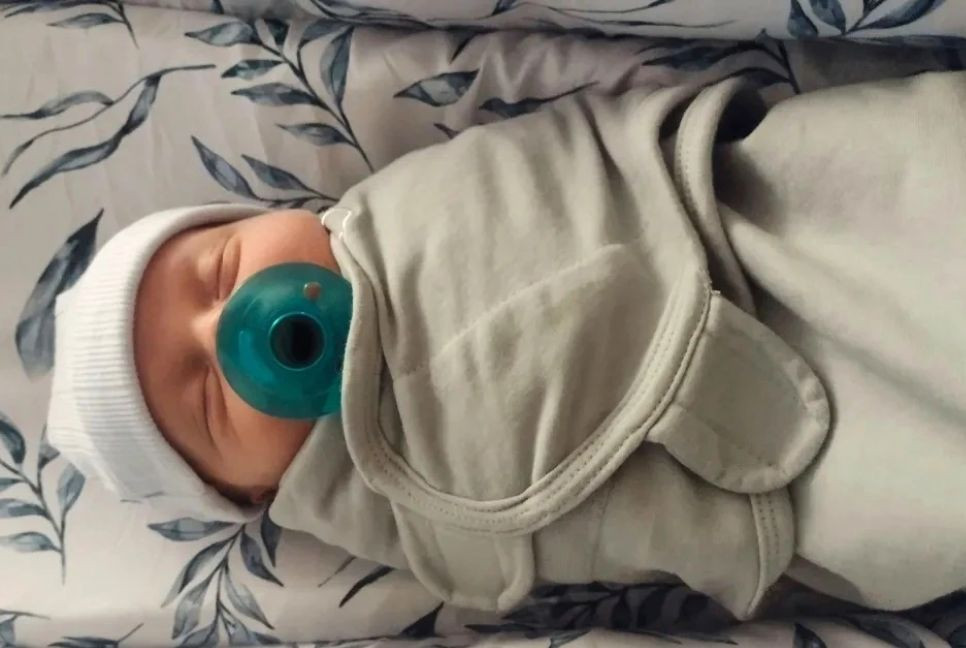
A baby boy born last week to an Ohio couple developed from an embryo that had been frozen for more than 30 years in what is believed to be the longest storage time before a birth.
In what’s known as embryo adoption, Lindsey and Tim Pierce used a handful of donated embryos that have been frozen since 1994 in pursuit of having a child after fighting infertility for years. Their son was born Saturday from an embryo that had been in storage for 11,148 days, which the Pierces’ doctor says sets a record, according to an AP report.
The concept has been around since the 1990s but protested by Christian-centered believers. Protesters opposed the leftover embryo concept because of their belief that life begins at or around conception and that all embryos deserve to be treated like children who need a home.
“I felt all along that these three little hopes, these little embryos, deserved to live just like my daughter did,” said Linda Archerd, 62, who donated her embryos to the Pierces.
Just about 2% of births in the U.S. are the result of in vitro fertilization, and an even smaller fraction involve donated embryos.
However, medical experts estimate about 1.5 million frozen embryos are currently being stored throughout the country.
Further complicating the topic is a 2024 Alabama Supreme Court decision that said that frozen embryos have the legal status of children. Since then, questions linger about remaining embryos.
Archerd says she turned to IVF in 1994. She wound up with four embryos and initially hoped to use them all. But after the birth of her daughter, Archerd and her husband divorced, disrupting her timeline for having more children.
As the years turned into decades, Archerd said she was wracked with guilt about what to do with the embryos as storage fees continued to rise.
Eventually, she found Snowflakes, a division of Nightlight Christian Adoptions, which offers open adoptions to donors from people like Archerd. She was also able to set preferences for what families would adopt her embryos.
“I wanted to be a part of this baby’s life,” she said. “And I wanted to know the adopting parents.”
The process was tricky, requiring Archerd to contact her initial fertility doctor in Oregon and dig through paper records to get the proper documentation for the donation. The embryos then had to be shipped from Oregon to the Pierces’ doctor in Tennessee. The clinic refuses to discard frozen embryos and has become known for handling embryos stored in outdated and older containers.
Of the three donated embryos the Pierces received from Archerd, one didn’t make the thaw. Two were transferred to Lindsey Pierce’s womb, but just one successfully implanted.
According to Dr. John David Gordon, the transfer of the nearly 31-year-old, or 11,148 days, embryo marks the longest-frozen embryo to result in a live birth.
“We didn’t go into this thinking about records — we just wanted to have a baby,” Lindsey Pierce said.
For Archerd, the donation process has been an emotional roller coaster. Relief that her embryos finally found a home, sadness it couldn’t be with her and a little anxiety about what the future holds next, with possibly meeting the Pierces and the baby in person.
“I’m hoping that they’re going to send pictures,” she said, noting that the parents have already sent several after the birth. “I’d love to meet them some day. That would be a dream come true to meet — meet them and the baby.”
Bd-pratidin English/FNC