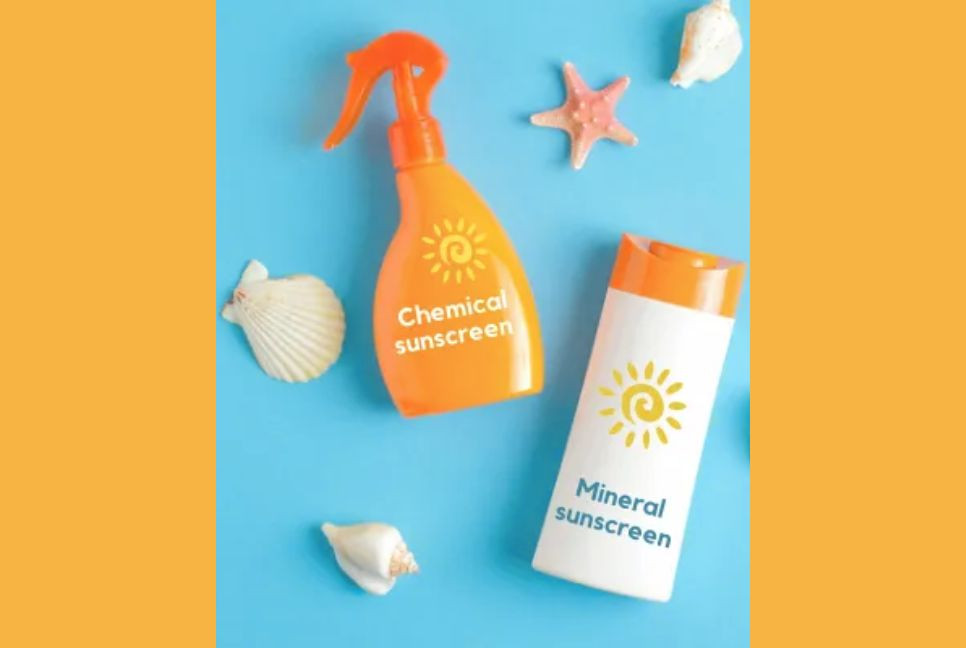
Mineral sunscreens are gaining popularity over chemical ones amid concerns about toxicity, pollution, and effectiveness. However, the debate is riddled with misconceptions.
“All are chemicals,” says Brian Diffey, emeritus professor at the University of Newcastle in the UK. The so-called "chemical" (organic) filters contain carbon-hydrogen bonds, while "mineral" (inorganic) ones like titanium dioxide and zinc oxide do not, reports BBC.
Sunscreens have existed in various forms for millennia, but it wasn’t until the 19th century that scientists discovered UV radiation and substances that could absorb it. Organic sunscreens, including lab-made ones like avobenzone and oxybenzone, became popular due to their UV-absorbing power. Later came mineral sunscreens, often perceived as more natural but also lab-produced.
A major myth is that chemical sunscreens absorb UV, while mineral ones reflect it. “People say that mineral or inorganic sunscreens reflect ultraviolet radiation,” says Antony Young of King’s College London. “And that's not true.” A 2015 study found mineral filters absorb 95% of UV, scattering only about 5%.
Despite performance similarities, mineral sunscreens can feel heavier and leave a white cast. Advances using nanoparticles have improved this, though some worry about skin penetration. But even the smallest particles don’t go beyond the outer skin layer.
Some organic filters are absorbed into the bloodstream. “Whether or not that's doing us any harm or not remains to be seen,” says Diffey. However, studies show absorption levels are far below harmful thresholds.
Environmental impacts, especially on coral reefs, remain under study. Still, experts agree the biggest threat to corals is climate change.
While no sunscreen has proven harmful to humans, unprotected UV exposure has—contributing to skin cancer. Ultimately, “SPF is SPF,” says Young. “It doesn't really matter what the ingredients are.”
Bd-pratidin English/FNC