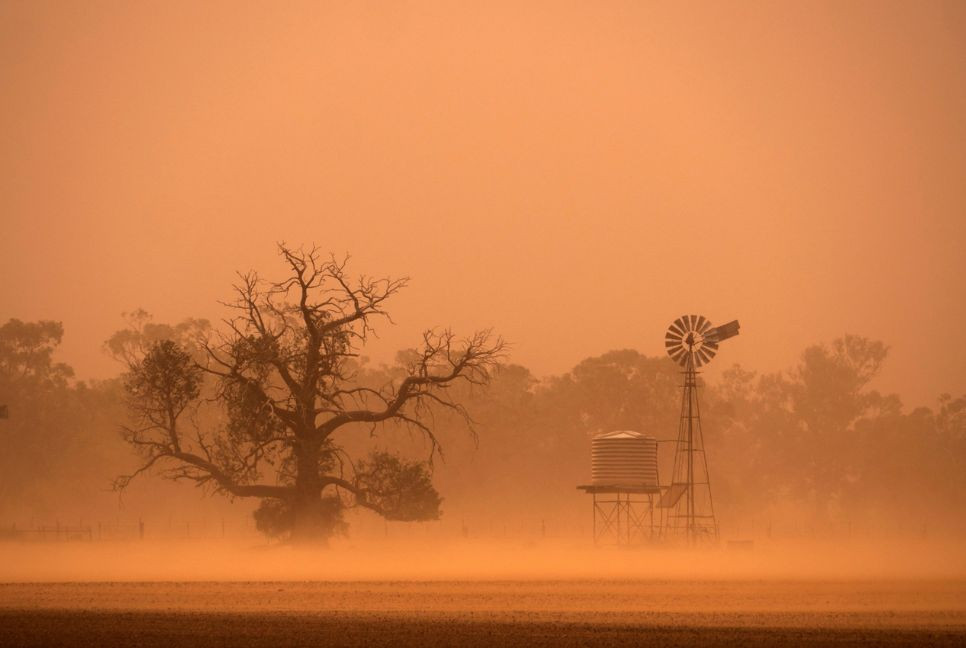
Sand and dust storms are affecting the lives of around 330 million people in more than 150 countries and are causing growing damage to public health, economies, and the environment, according to the UN’s World Meteorological Organization (WMO).
Laura Paterson, the WMO’s representative to the UN, told the General Assembly that about 2 billion tons of dust are released into the atmosphere each year — the equivalent of 300 Great Pyramids of Giza, reports AP.
While over 80 percent of this dust originates from deserts in North Africa and the Middle East, Paterson explained that its effects are felt worldwide, as the particles can travel thousands of kilometers, crossing continents and oceans.
The General Assembly observed the International Day of Combating Sand and Dust Storms on Saturday and declared 2025 to 2034 as the UN Decade for addressing this issue.
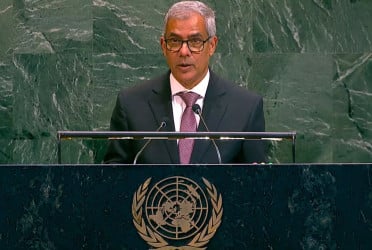
Assembly President Philemon Yang, through a speech delivered by a vice president, called sand and dust storms one of the most neglected yet far-reaching global crises, driven by climate change, land degradation, and unsustainable land use.
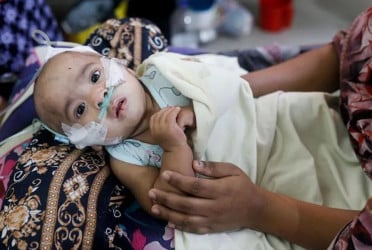
Yang highlighted that airborne particles from these storms contribute to about 7 million premature deaths annually due to respiratory and heart-related illnesses. They also severely impact agriculture, slashing crop yields by as much as 25 percent and contributing to food insecurity and migration.
Rola Dashti, Executive Secretary of the UN Economic and Social Commission for Western Asia, said the financial burden of these storms is “staggering.” In the Middle East and North Africa alone, the annual cost is around $150 billion — roughly 2.5 percent of the region's total GDP.
She noted recent major storms in Iraq that overwhelmed hospitals with respiratory cases and others in Kuwait and Iran that forced widespread school and office closures.
Dust from the Sahara has even been detected as far away as Florida and the Caribbean, she added.
Dashti, who also co-chairs the UN Coalition on Combating Sand and Dust Storms, emphasized that over 20 UN and global agencies are now working together on improving early warning systems and addressing the health and financial challenges posed by these storms.
She called on governments to integrate sand and dust storm response strategies into both global and national agendas.
Bd-pratidin English/FNC