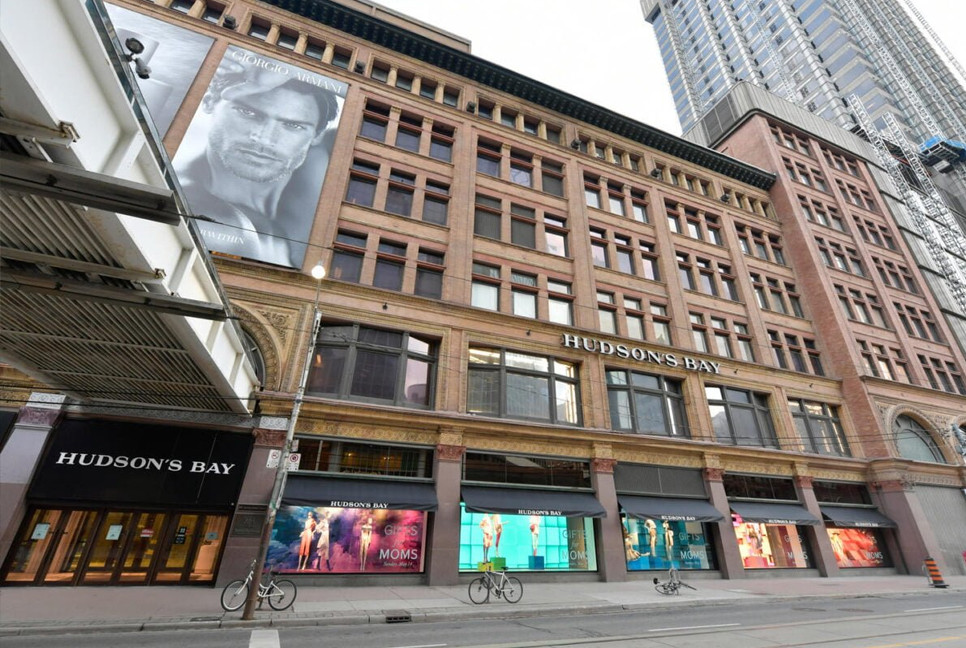
After more than three and a half centuries, the iconic Hudson’s Bay Company, commonly known as The Bay, is closing its remaining 80 department stores across Canada.
The announcement came just a month after the company celebrated its 355th anniversary, marking the end of a retail institution deeply woven into Canada’s history and culture, reports The New York Times.
Founded in 1670 by British royal charter, the Hudson’s Bay Company once controlled a vast territory covering nearly one-third of present-day Canada.
Originally established as a fur trading enterprise, the company played a significant role in the country’s early economic development — a legacy that remains complicated by its colonial origins and disputed relationships with Indigenous peoples whose lands it occupied without consent.
For many Canadians, The Bay has been more than just a place to shop. It was a uniquely Canadian symbol, known for its iconic green, red, yellow, and indigo “point blankets,” originally used in the fur trade. “It felt like a piece of Canada,” said Bryan Higgins, a loyal customer who made a farewell visit to the Ottawa store. “Going there was like going to Tim Hortons, it was part of the culture.”
Despite its cultural resonance, The Bay’s retail business struggled for years, weighed down by mounting debt and intensified competition from online retailers. The company declared bankruptcy earlier this year, hastening the closure of its stores and leaving thousands of employees facing layoffs without severance.
Shoppers like Beye Escobar experienced mixed emotions during the store’s final days. Escobar, who took advantage of steep discounts during liquidation sales, expressed sadness about the closure. “They had very good stuff,” she said. “I don’t know where I’ll go now.” Others, like Ashley Johnson, welcomed the discounts but were less attached to the brand. “It’s way too expensive,” Johnson said bluntly. “I’m not going to miss it.”
The Bay’s decline accelerated after it was acquired in 2008 by Richard A. Baker, a New York-based retail mogul. Though initially praised for revitalizing the company including heavy investments in e-commerce and a focus on the brand’s heritage- Baker’s priorities later shifted to other luxury department stores in the U.S. and Europe.
After acquiring Neiman Marcus, he separated Hudson’s Bay from his other holdings, leaving the Canadian retailer increasingly neglected.
The physical stores suffered visibly, with customers reporting broken escalators and poorly maintained facilities. In the Ottawa flagship store, once expansive departments for furniture, kitchenware, and linens dwindled to mostly empty shelves. Despite these signs, many devoted shoppers made repeated trips to the final sales, hoping to find last-minute bargains amid the store’s remaining merchandise.
The company’s intellectual property — including its historic name — was sold to Canadian Tire, another Canadian retailer, which stated it has no plans to reopen The Bay stores. Meanwhile, a small British Columbia real estate company acquired leases for 28 former Bay locations, with a vague ambition to launch a new department store chain, pending landlord and court approval.
Hudson’s Bay’s legacy is complex. While many Canadians hold nostalgic feelings about the brand, Indigenous voices emphasize the company’s role in the colonization and exploitation of Indigenous lands and peoples. “I had a love-hate relationship with the store,” said Geneviève Cloutier, a customer reflecting on this dual legacy. “Seeing the Bay blanket made me think of Canadiana but it also reminded me of the dark side, the colonial violence tied to its history.”
As the final stores close their doors, the retail landscape in Canada continues to shift dramatically, with online shopping and global competitors reshaping consumer habits. The end of Hudson’s Bay as a department store chain marks not just the loss of a retailer, but the closing chapter of a company that was part of Canada’s founding story a story full of both pride and painful contradictions.
Bd-pratidin English/ Afia