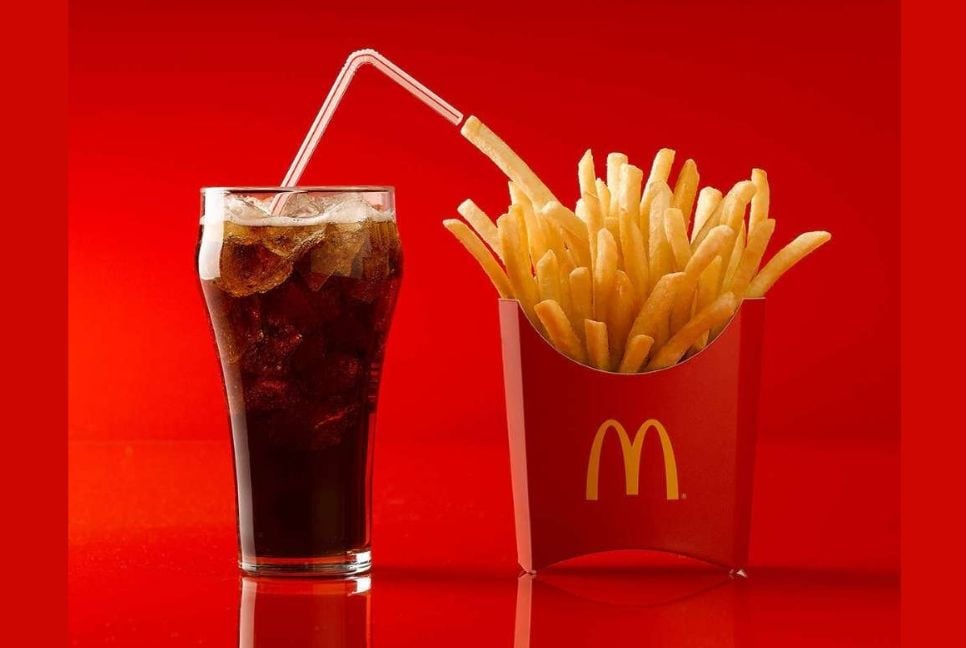
Migraine affects over 10 million people in the UK, with no known cure. While medical treatments exist, they don’t always work, and many turn to unconventional methods to ease the pain—like ice packs, hairdryers, or now, the “McMigraine Meal.”
This viral TikTok trend suggests that a full-fat Coke and salty fries can help fend off an attack. Hundreds are praising it online, but experts are cautious about its effectiveness.
Nick Cook from Oxfordshire, who carries “a wallet full of drugs” for migraines, says he’ll try anything.
“When you live with the condition, and you're working a five-day week and you need to carry on, you'll give anything a go.”
For him, the caffeine and sugar in Coke can help if he catches the migraine early. “If I catch it soon it enough it can sometimes work when my vision goes fuzzy and I can feel one coming on.”
Still, he says it doesn't replace his daily medication, amitriptyline. It just helps him “last until the end of the day.”
For 27-year-old Kayleigh Webster, who has battled migraines her whole life, it’s the salt in the fries that might help slow down an attack. “It can help,” she says cautiously, “but it's certainly not a cure.
“Migraine is a complex neurological condition – and it can't be cured by a bit of caffeine, salt and sugar in a fast food meal.”
She’s tried various treatments, from acupuncture to cupping. Only medical Botox injections in her head, face, and neck have provided some relief.
Migraines differ significantly from regular headaches. They can last days, affect speech and movement, and cause intense head and neck pain. Their exact cause remains unknown, but it’s believed nerve tissues misfire, sending false pain signals to the brain.
Dr Kay Kennis, a GP who specialises in migraines, explains why the viral meal might offer some relief.
“The caffeine in the coke can act as a nerve disruptor… For some, that disturbance works in a positive way,” she says.
“There are some painkillers that people take for migraines that have caffeine – and some do respond well to that – but we don't fully know why.”
Still, she warns that too much caffeine can become a trigger, and fast food itself may contain migraine-inducing ingredients like Tyramine. “Fast food is ultra-processed and not conducive to a healthy diet,” she says.
Eloise Underwood, a chronic migraine sufferer, says none of the viral “quick fixes” work for her. She’s tried everything from hot coffee to vibrating gadgets. “There are so many videos online that take advantage of the desperation we all feel,” she says.
Forced to leave several jobs due to noise and lighting, Eloise now works from home, running a business pressing and framing wedding flowers. She limits her social life and wears loop earbuds to soften sharp sounds. “People think a migraine is just a headache – that's just one symptom of it,” she says. “Migraines have completely made my life smaller.”
But there’s hope. Prof Peter Goadsby from the NIHR-King’s Clinical Research Facility is testing a new class of drugs called gepants, which may stop migraines before they begin. “Any new treatment is a glimmer of hope,” says Eloise. “They do say that nothing will work for everyone – but something will work for someone.”
He adds that lifestyle regularity is crucial: “You want to have regularity, avoid the highs and lows… Listen to your body – don’t listen to TikTok, that’s my advice.”
Nick has done just that, shaping his life around avoiding triggers. “I don’t drink, I wear sunglasses even if it’s cloudy… When me and my partner go away, half the stuff we take is to help us manage our migraines.”
On a recent stag weekend, Nick brought fruit, Weetabix, and snacks to avoid hunger—a major trigger.
“I’m in bed by midnight – but my mates know me, and that’s OK because this is how I have to live my life.”
Source: BBC
Bd-pratidin English/FNC