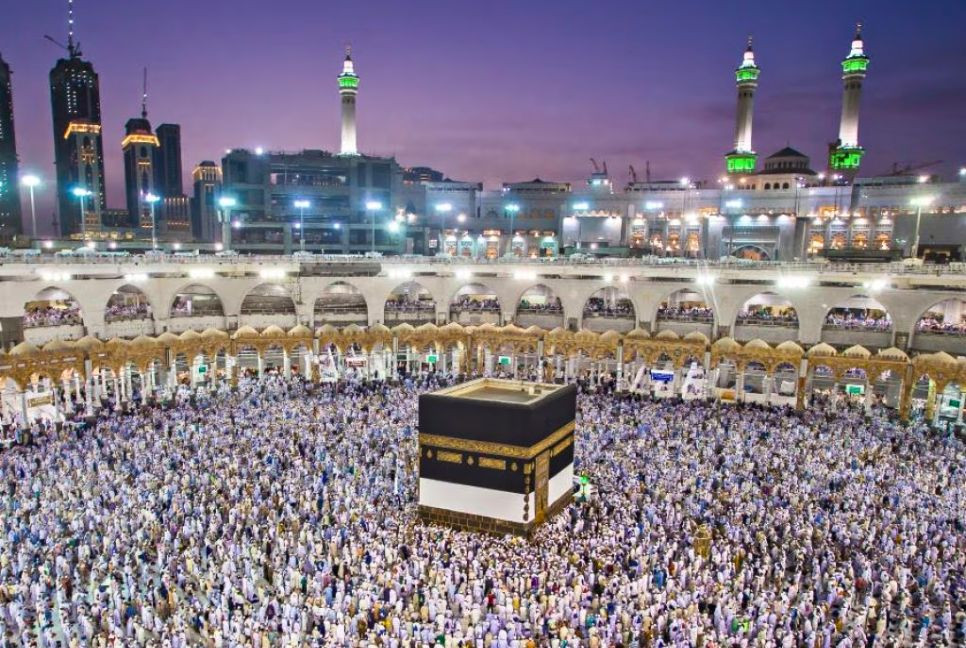
An estimated 1.8 million Muslims are preparing to embark on the Hajj pilgrimage to Mecca which begins on June 4.
An estimated 1.8 million Muslims are preparing to embark on the Hajj pilgrimage to Mecca which begins on June 4.
The Hajj is the largest annual gathering of Muslims from all over the world and a once-in-a-lifetime journey for many.
These are some frequently asked questions about the Hajj, its significance, rituals and preparations.
What is the Hajj?
The Hajj is the annual pilgrimage to Mecca, Saudi Arabia, and it is the fifth and final pillar of Islam, along with the declaration of faith (shahada), five daily prayers, obligatory charity (zakat), and fasting during the month of Ramadan.
The word comes from the Arabic root “h-j-j”, which means “intending a journey” or “to set out for a definitive purpose”.
It is obligatory once in a lifetime for all adult Muslims who are physically and financially able to undertake the journey.
When is the Hajj performed?
The Hajj is performed between the 8th and 12th (or 13th) of Zilhaj, the 12th and final month of the Islamic calendar. The timing falls roughly 70 days after the end of Ramadan, though this can vary slightly depending on the lunar cycle.
In 2025, the Hajj will take place from June 4 to June 9, but many start arriving in the days and weeks ahead to prepare for the journey.
Because the Islamic calendar follows a lunar cycle, with months lasting 29 or 30 days, the Hajj shifts 10 to 12 days earlier each year in the Gregorian calendar. Notably, this year marks the last time for the next 16 years that the Hajj will fall during Mecca’s peak summer heat.
Why do Muslims perform the Hajj?
Muslims believe that the Hajj is a direct commandment from Allah (God), as outlined in the Muslim holy book, the Quran.
It was affirmed during Prophet Muhammad’s “farewell pilgrimage” in 632 AD, in the 10th year of the Islamic calendar.
Islamic tradition holds that the Kaaba, a stone structure draped in black silk at the centre of Mecca’s Grand Mosque where many Hajj rituals take place, was built by Prophet Ibrahim and his son Ismaeel under God’s command. This marks the origins of the Hajj, which was instituted as a divine ritual for the first time.
The journey is a spiritual one, and it is considered to allow Muslims to seek forgiveness, purify their souls and demonstrate their submission to God.
Hajj also serves as a reminder of the Day of Judgement, and by performing it, Muslims follow the example of Prophet Ibrahim and his family, whose actions are commemorated during the pilgrimage rituals. Ultimately, it is a way to fulfil a key religious obligation and strengthen one’s faith.
What is the difference between the Hajj and Umrah?
While the Hajj is a compulsory pilgrimage for all able-bodied Muslims once in their life, Umrah is a recommended smaller and simpler pilgrimage that Muslims can perform any time throughout the year.
Which key rituals do Muslims perform during the Hajj?
Muslims perform a series of rites over several days during the Hajj:
DAY 1
Ihram – Pilgrims enter a state of spiritual and physical purity with the intention (niyah) to perform Hajj. Men wear two unstitched white garments; women wear modest dresses. This state must be assumed before entering Mecca.
Arrival Tawaf – Pilgrims circle the Kaaba seven times and may perform sa’i, walking between Safa and Marwa hills inside Masjid al-Haram.
Mina – Pilgrims travel 8km to Mina to spend the night in prayer. Known as the “city of tents,” Mina accommodates millions.
DAY 2
Day of Arafah – Pilgrims gather on the plains of Arafah for wuquf (standing) from midday to sunset, praying and repenting. This is the most significant Hajj ritual. Muslims worldwide are encouraged to fast.
Muzdalifah – After sunset, pilgrims travel 9km to Muzdalifah, pray, collect pebbles for the stoning ritual, and sleep under the open sky.
DAY 3
This marks the first day of Eid ul-Adha.
Rami al-Jamarah al-Kubra – Pilgrims return to Mina to throw seven pebbles at the largest pillar, symbolising the rejection of Satan.
Qurbani – An animal is sacrificed, commemorating Ibrahim’s devotion.
Halq or Taqsir – Men shave or trim hair; women cut a small portion, symbolising renewal.
Tawaf al-Ifadah – Pilgrims return to Mecca for another Tawaf and Sa’i.
DAYS 4 and 5
Pilgrims stay in Mina, performing the stoning ritual at all three pillars each day.
DAY 6 (optional)
Pilgrims who remain repeat the stoning ritual before departing.
Farewell Tawaf
Before leaving Mecca, pilgrims perform the Tawaf al-Wada — a final circumambulation of the Kaaba.
What are the different types of Hajj?
Hajj al-Tamattu – Most common for international pilgrims. Umrah is performed first, followed by Hajj after exiting and re-entering Ihram. Animal sacrifice is required.
Hajj al-Qiran – Umrah and Hajj are combined without exiting Ihram. Sacrifice is required.
Hajj al-Ifrad – Hajj alone, usually for Mecca residents. No sacrifice is required.
What is not permitted during the Hajj?
Forbidden acts include sexual relations, cursing, arguing, hunting, shaving, cutting nails, wearing stitched clothes (for men), using perfume, and covering the face (for women) or head (for men). Mistakes are rectified through repentance, charity, or sacrifice.
What should one pack for the Hajj?
A packing checklist helps avoid overpacking while ensuring all essentials are covered.
How do Muslims mark the end of the Hajj?
With Eid ul-Adha, starting on the 10th of Zilhaj. Muslims offer special prayers, share meals, and perform Qurbani, distributing meat to family, friends, and the needy. The greeting “Eid Mubarak” is widely exchanged.
Courtesy: Al Jazeera
Bd-pratidin English/FNC