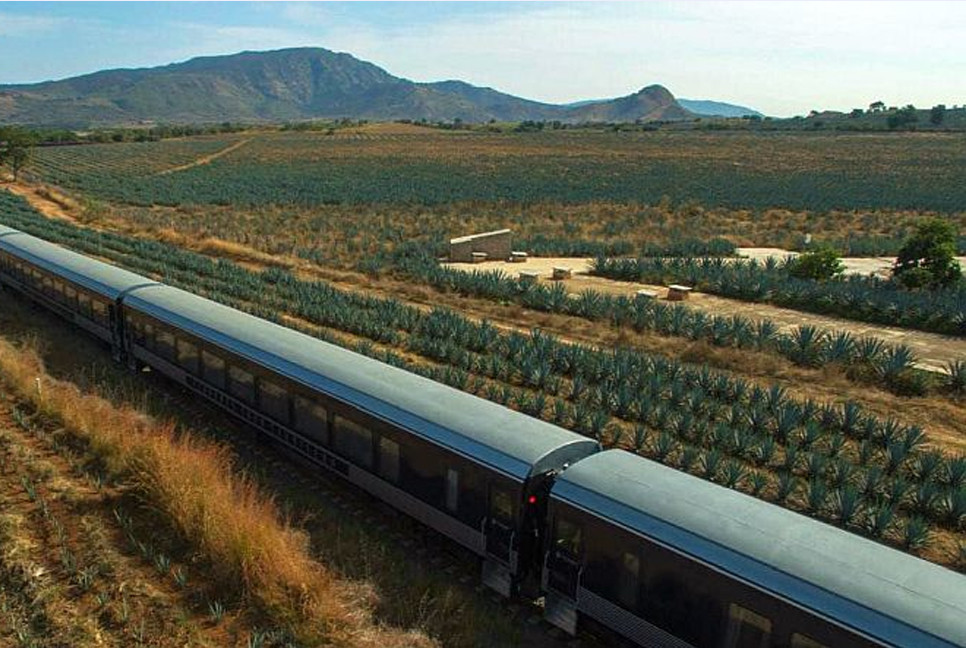
With the rise of "tequila tourism" in Mexico, the iconic Tequila Express has made a triumphant return after a nine-year hiatus.
Relaunched in September 2024, this refurbished train now offers more than just scenic travel it provides a journey deep into the heritage, agriculture, and craftsmanship behind one of Mexico's most celebrated exports.
Running between Guadalajara and the town of Tequila in Jalisco state, the Tequila Express was originally launched in 1997 to support growing interest in visiting the region’s distilleries.
Tequila, home to about 45,000 people and around 25 distilleries, has become the epicenter of the tequila industry.
The original Tequila Express service ended in 2015 and was briefly revived in partnership with the Herradura brand, but that too was shuttered in 2020 due to the pandemic.
With tourism rebounding by 2023, and Tequila drawing over 1.2 million visitors annually, authorities and private investors poured 170 million pesos (around £7 million) into restoring the train to its former glory.
Now, the Tequila Express is less of a party train and more of a mobile cultural showcase. The interiors have been upgraded to resemble boutique accommodations, complete with marble-topped bars, low-light lamps, wood-panelled walls, and piped mariachi music. TV screens onboard highlight regional foods and distilleries, setting the tone for the experience that awaits.
Despite the association with tequila, the train caters to a wide audience. Non-alcoholic agave-based drinks like Almave are available, and while passengers are welcome to sip cocktails, the atmosphere remains relaxed and civil.
Most passengers are domestic tourists—many middle-aged and well-dressed—while international travelers, including a few backpackers, are sprinkled throughout the carriages. A tour guide aboard provides historical context and tasting notes as the train moves across a 65-kilometre landscape rich with agave and cacti, framed by Jalisco’s distant mountains.
The agave fields surrounding the tracks aren't just scenic; they are essential to the spirit’s authenticity. Since 1974, tequila must be produced in designated areas primarily Jalisco to legally carry the name. In recognition of the region’s unique natural and cultural landscape, UNESCO declared the area a World Heritage Site in 2006.
Upon arrival at the sun-drenched station in Tequila, passengers can choose between guided tours often included in ticket packages or explore independently. One of the most popular stops is the massive Sauza distillery, a major name in tequila production. Day trips typically include tours of the distillery and agave fields, town visits, meals, and drinks, with Saturday tours being the most comprehensive.
In the town’s main square, a mural depicting a bolt of lightning striking an agave plant commemorates the legend of tequila’s origin. According to the tale, the spirit was first discovered when lightning caused agave sap to ferment. The mural also honors influential tequila-producing families like Cuervo and Sauza, who commercialized the drink in the 18th and 19th centuries.
Visitors often stop at La Capilla, Tequila’s oldest cantina, recommended by Tequila Express staff. This unassuming venue is the birthplace of the batanga—a cocktail made from Coca-Cola, lime, and tequila—created in the 1960s by Don Javier Delgado Corona. Though Don Javier passed away in 2020, his legacy is kept alive both in drinks and through his portrait behind the bar.
Beyond cantinas and distilleries, some tourists seek a deeper understanding of the tequila-making process. One such experience is a field tour with Atanasio Tequila, a boutique distillery that emphasizes education and tradition. Participants are taken into the agave fields, where they learn about the rigorous labor behind each bottle of tequila.
Field workers harvest young agaves, or hijuelos, which grow from mature plants. Using a shovel-like barretón, workers uproot these spiky shoots, each earning only one peso per hijuelo harvested and another peso for replanting it—a process that takes place years before the plant reaches full maturity. The experience highlights the physical demands and agricultural knowledge required in tequila production, often overlooked by casual drinkers.
Unlike many of the party-focused tequila tours, Atanasio’s field experience is about reconnecting with the land and labor behind the spirit. The educational emphasis reflects a broader shift in tequila tourism—one that respects the agricultural roots and cultural significance of tequila, rather than merely its effects.
The Tequila Express, once a novelty ride for drinkers, now stands as a thoughtful, immersive journey. It invites travelers not only to taste Mexico’s national spirit but also to understand and appreciate the tradition, history, and human effort poured into every glass.
Details
- Route: Guadalajara to Tequila, Jalisco
- Operating Schedule: Year-round
- Booking: Available via Tequilaexpress.mx (Spanish)
- Pricing: From 1,150 pesos (£45) one-way; return from 1,785 pesos (£67). All-inclusive Saturday day trips: 3,900 pesos (£150) per person
- Experience Includes: Train journey, Sauza distillery and agave field tour, guided town tour, meals, drinks (including alcohol), and on-board snacks
Source: BBC
Bd-pratidin English/ Afia