In the early Bronze Age, a piece of bread was buried beneath the threshold of a newly built house in what is today central Turkey.
Now, more than 5,000 years later, archaeologists have unearthed it, and helped a local bakery to recreate the recipe -- with customers lining up to buy it, reports AFP.
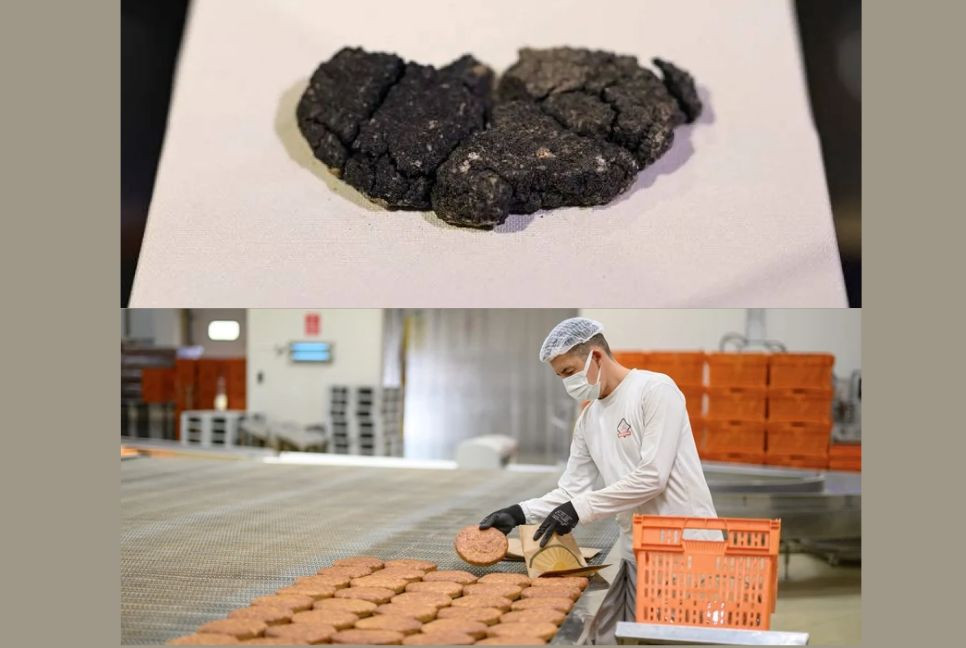
Round and flat like a pancake, 12 centimetres (five inches) in diameter, the bread was discovered during excavations at Kulluoba, a site near the central Anatolian city of Eskisehir.
"This is the oldest baked bread to have come to light during an excavation, and it has largely been able to preserve its shape," said Murat Turkteki, archaeologist and director of the excavation.
"Bread is a rare find during an excavation. Usually, you only find crumbs," he told AFP.
"But here, it was preserved because it had been burnt and buried," he said.
The bread was charred and buried under the entrance of a dwelling built around 3,300 BC.
A piece had been torn off, before the bread was burnt, then buried when the house was built.
"It makes us think of a ritual of abundance," Turkteki said.
Unearthed in September 2024, the charred bread has been on display at the Eskisehir Archaeological Museum since Wednesday.
Analyses revealed the ancient bread was made with emmer flour, lentils, and a plant-based yeast. As emmer no longer grows in Turkey, the municipality used Kavilca wheat, bulgur, and lentils to recreate it.
At the Halk Ekmek bakery, 300 preservative-free Kulluoba loaves—handmade daily—sold out quickly.
It's rich, satiating, and low in gluten, according to the bakery manager, Serap Guler.