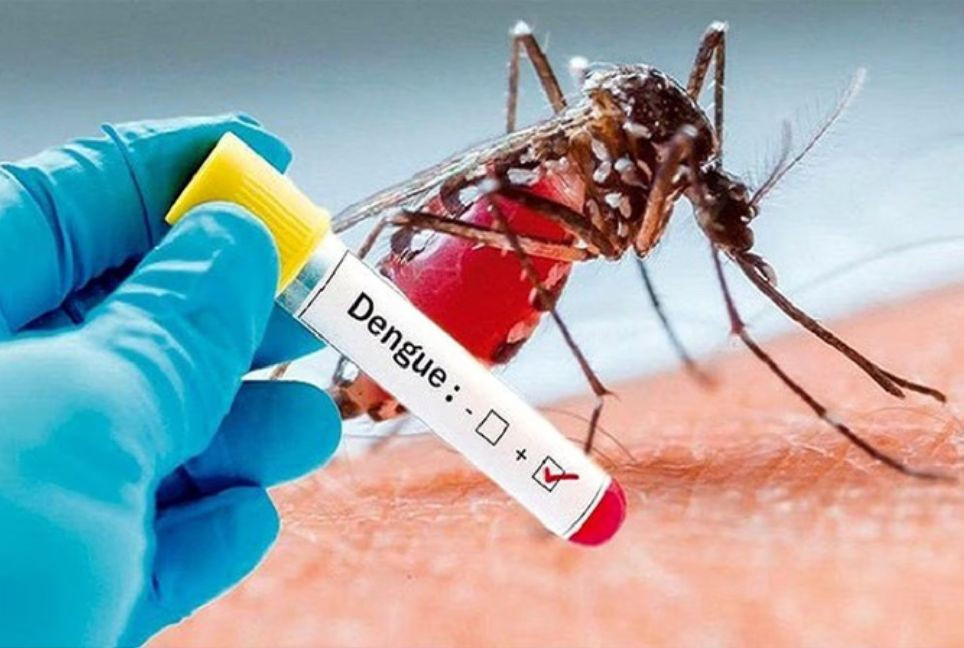
Mosquitoes that transmit dengue and chikungunya have been heading toward north due to global warming. Consequently, these two feverish diseases could soon become endemic in Europe, according to a new research published on Thursday.
Already, half of the world's population is at risk of contracting the two diseases. Earlier, these diseases were mainly confined to tropical regions, reports AFP.
Both viruses cause fevers and can be deadly in some cases. They are spread by the mosquitoes Aedes aegypti and Aedes albopictus.
Aedes albopictus, also known as the tiger mosquito, is venturing further north as the world warms because of human-driven climate change.
The new study, published in the Lancet Planetary Health journal, analyses the impact a number of factors, including the climate have had on the spread of the two diseases in Europe over the last 35 years.
The frequency and severity of outbreaks have increased since 2010 as temperatures have risen, the study says.
Yet just over 300 cases of dengue were recorded in the European Union in 2024 -- the hottest year on record -- compared to 275 over the previous 15 years.
Dengue outbreaks have now hit Italy, Croatia, France and Spain.
"Our findings highlight that the EU is transitioning from sporadic outbreaks of Aedes-borne diseases towards an endemic state," it said.
The higher temperatures soar, the greater the risk of outbreaks caused by tiger mosquitoes, the European research team said.
Under worst-case climate change scenarios, outbreaks of both diseases could rise to five times the current rate by 2060, they predicted.
Outbreaks have been more common in wealthier areas, suggesting that better testing is able to spot the virus -- and that cases could be going undetected in poorer areas, the study suggested.
Recently, the French Indian Ocean island of Reunion endured a deadly outbreak of chikungunya.
Meanwhile, tiger mosquitoes can also transmit the Zika and West Nile viruses, which were not studied in the latest research.
Bd-pratidin English/FNC