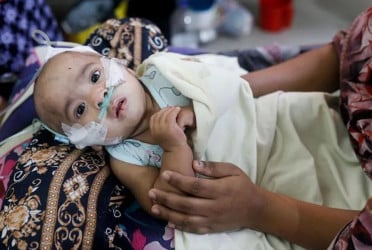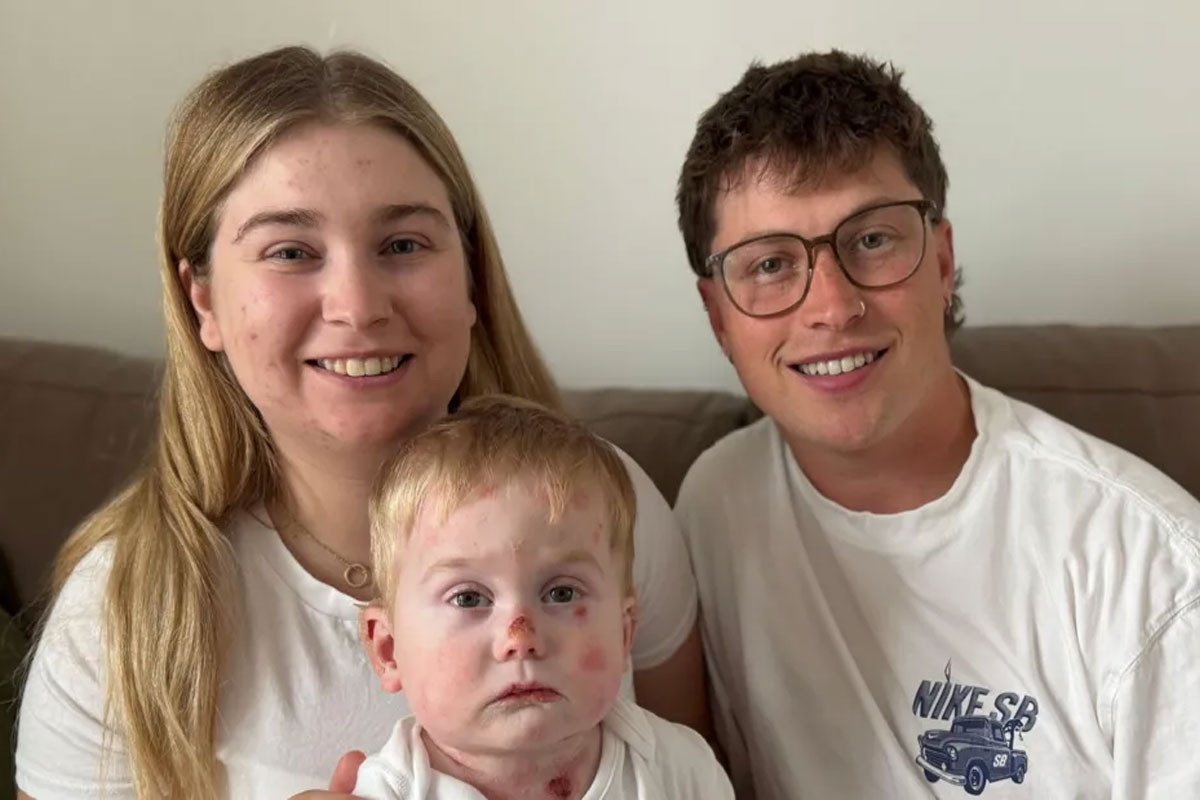
A young couple from Tondu, Bridgend, has opened up about the heartbreaking reality of raising their 20-month-old son Albi, who suffers from a severe form of a rare genetic skin condition known as recessive dystrophic epidermolysis bullosa (RDEB). The disorder makes even the gentlest touch potentially harmful, as Albi’s skin can tear or blister with minimal friction — including from something as tender as a cuddle, reads a BBC report.
“When he was first born, we were too afraid to even hold him,” said Albi’s mother, Erin Ward, 23. “You would never believe that skin could be so fragile and just cuddling your child could tear it.”
Albi was born on August 19, 2023, at Princess of Wales Hospital. Doctors immediately noticed patches of missing skin on his right leg, left foot, and hands. After further tests and consultations with specialists at Great Ormond Street Hospital, Albi was diagnosed with RDEB — a life-limiting condition that affects both external and internal skin layers.
Albi’s father, Calum Blackman, 26, recalls the crushing weight of the diagnosis. “It’s hard to process that this isn’t just a skin condition — it’s something that could shape his entire life.”
RDEB is caused by the absence of type VII collagen, a critical protein that anchors the skin layers together. Without it, Albi's skin is so delicate that it blisters internally, too — especially in his mouth and oesophagus, making eating excruciating. He is fed through a tube inserted into his stomach.
Every day, Erin and Calum spend up to two hours carefully removing old bandages and applying fresh ones. Though Albi is given painkillers, the process remains agonizing. “He’s covered in bandages from neck to toe. It protects him and helps with healing, but this is something he’ll need for the rest of his life,” said Erin.
Children with EB are often referred to as “butterfly children” because their skin is as delicate as a butterfly’s wing. The emotional toll is immense. “Your stomach drops when someone tries to play with him. A bump could cause a wound that takes weeks to heal,” said Calum.
Despite his condition, Albi is a joyful child. Erin, who runs a nail and beauty business, said, “We were scared at first, but over time we became experts in how to hold him and care for him.”
Albi is currently enrolled in a stem cell clinical trial, Rhea Cell, at Great Ormond Street Hospital, receiving infusions every two months. His parents are hopeful that this pioneering treatment may lead to a cure.
“We have to monitor his hands closely, as EB can cause fingers to fuse. Many children end up in wheelchairs due to foot blisters that make walking too painful,” Erin explained. “He heals quickly now, but as he grows older, healing might slow. A wound that takes two weeks today could take months later on — or never heal at all.”
The couple, both silent carriers of the EB gene, are determined to raise awareness about the condition. “We often get questions — people think he’s been in an accident. It’s upsetting, but we know we have to educate others,” said Erin. “We can’t wrap him in cotton wool forever. He deserves to live, laugh, and play like any child.”
It is estimated that over 5,000 people in the UK are living with epidermolysis bullosa. With continued research and growing awareness, Albi’s family — and many others — are holding on to hope for a better future.
Bd-pratidin English/ Jisan