
The presence of CRE increases a patient’s risk of developing infections and prolongs hospital stays
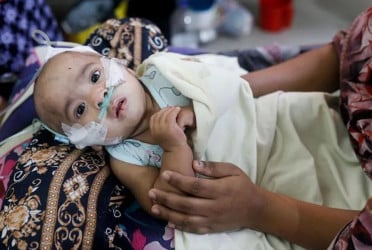
A recent study has found that 81% of newborns admitted to neonatal intensive care units (NICUs) carry a bacterium called Carbapenem-Resistant Klebsiella pneumoniae (CR-Kpn), which is resistant to carbapenems – a class of critically important antibiotics.
The study, conducted on 423 neonates, also revealed that 70% of those carrying the bacteria acquired it after 48 hours in hospital, confirming the risk of acquiring Antimicrobial Resistance in hospitals.
Dr Fahmida Chowdhury, associate scientist and lead of the Antimicrobial Resistance (AMR) Research Unit at icddr,b, presented the findings at a seminar titled “Addressing Antimicrobial Resistance in Bangladesh: Insights from the ARCH Study” at its Sasakawa Auditorium on the Mohakhali Campus, Dhaka, on Thursday.
The icddr,b study – Antibiotic Resistance in Communities and Hospitals (ARCH) – was supported by the US Centers for Disease Control and Prevention (CDC) and The Task Force for Global Health (TFGH).
In addition to newborns, the study also highlighted the vulnerability of adult patients to antimicrobial resistance in hospitals.
It found that 60% of patients in adult ICUs are colonised with Carbapenem-Resistant Enterobacterales (CRE) – bacteria that are also resistant to carbapenems.
The presence of CRE increases a patient’s risk of developing infections and prolongs hospital stays.
The icddr,b study also tracked mother-child pairs to understand transmission and long-term risks. Around 40% of infants were colonised with CRE and nearly 90% with ESCrE within their first year of life.
Babies who stayed in hospital for more than 72 hours after delivery showed the highest burden of colonisation, according to the study.
It stated that by their first birthday, more than 80% of these infants had received at least one course of antibiotics, raising concerns about the impact of early antibiotic exposure on microbiome health and resistance patterns.
However, the study also demonstrated that infection prevention and control (IPC) interventions, such as strengthening hand hygiene among healthcare workers and improving environmental cleaning, can substantially reduce colonisation with resistant organisms and lower bloodstream infection rates in NICUs.
These findings, highlighted at the seminar, show that practical measures can protect vulnerable patients even in resource-limited hospital settings.
Courtesy: UNB
Bd-pratidin English/FNC