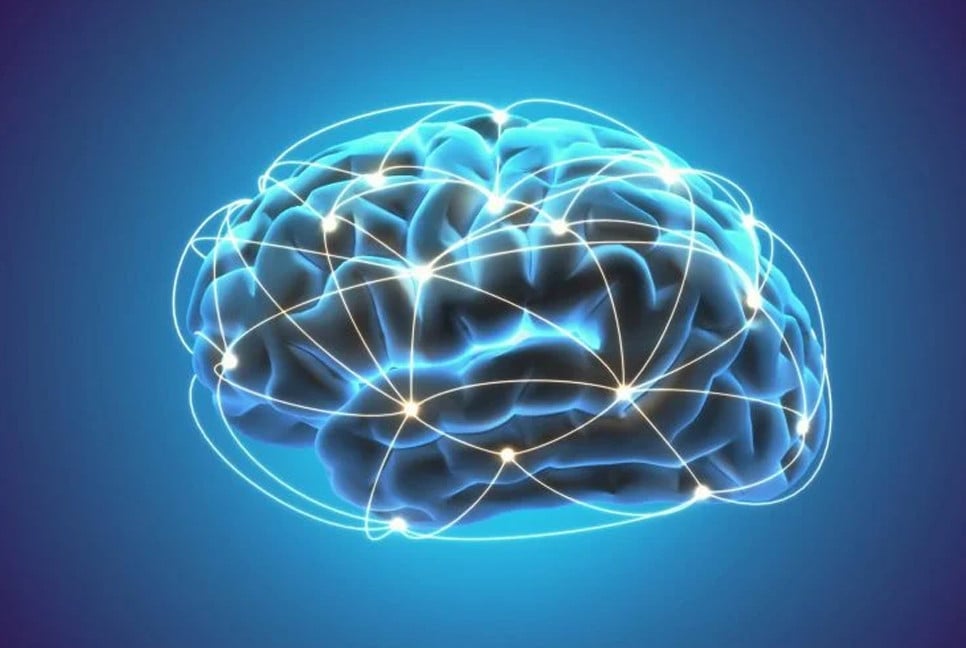
A recent study reveals that intelligence is more accurately predicted by overall brain connectivity rather than specific brain regions, suggesting a broader neural foundation for cognition. Researchers used fMRI data to explore fluid, crystallized, and general intelligence, finding that general intelligence was the strongest predictive power.
The human brain is the core organ that regulates the body. It processes sensory information, facilitates thinking, decision-making, and memory storage. Despite its impressive functions, much about this complex organ still remains a mystery.
Jonas Thiele and Dr. Kirsten Hilger, who leads the “Networks of Behavior and Cognition” research group at the Department of Psychology I at Julius-Maximilians-Universität Würzburg (JMU), are dedicated to unraveling the mysteries of the brain. Their latest research has been published in the scientific journal PNAS Nexus.
Predicting intelligence from brain connections
The researchers used data from the Human Connectome Project, a large-scale data-sharing initiative in the US, and examined over 800 individuals using fMRI, a technique that measures brain activity.
The Würzburg-led team analyzed connections between different brain regions to predict intelligence scores based on these patterns.
While previous studies have successfully predicted intelligence from brain data, Kirsten Hilger points out that such predictions are not as precise as traditional intelligence tests. Instead of focusing purely on prediction, the researchers aimed to understand the fundamental processes in the brain, hoping to uncover the neural basis for individual differences in intelligence.
Hilger encourages future studies to prioritize a deeper conceptual understanding of human cognition with an emphasis on interpretability.
Three types of intelligence
The team distinguished three types of intelligence in their predictions: Fluid intelligence refers to the ability to solve logical problems, recognize patterns, and process new information, independent of existing knowledge or learned skills.
Crystallized intelligence encompasses the knowledge and skills that a person acquires over the course of their life. This includes general knowledge, experience, and understanding of language and concepts. It arises through education and experience.
Together, these two forms make up general intelligence. The best predictive performance was achieved with general intelligence, followed by crystallized and fluid intelligence.
Brain-wide connections best predict intelligence
Various theoretical considerations determined which different connections in the brain were examined. In addition, randomly selected connections were also tested. One crucial observation: the distribution of connections across the entire brain as well as the pure number of connections were most important for predictive performance, more important than between which exact brain regions the individual connections were located.
“The interchangeability of the selected connections suggests that intelligence is a global property of the whole brain. We were able to predict intelligence not just from a specific set of brain connections, but from different combinations of connections distributed throughout the brain,” says Hilger.
Results outperform established theories
While traditional theories of intelligence often highlight specific brain areas, like the prefrontal cortex, this study indicates that connections between various brain regions also play a crucial role in intelligence.
Kirsten Hilger reports that the connections identified in well-known neurocognitive models of intelligence yielded better results than random connections, with even more improvement when additional complementary connections were included. This suggests that intelligence involves even more factors than previously thought, offering new areas for exploration in the future.
Source: SciTechDaily
Bd-pratidin English/ Afia