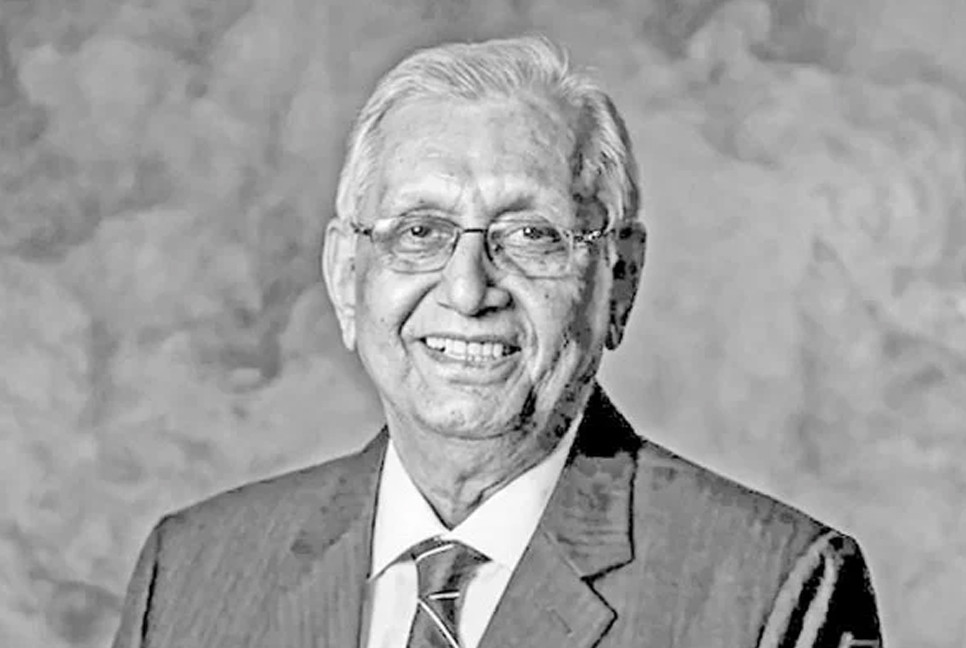
The final whistle has blown on one of the most extraordinary chapters in Bangladesh's sporting history, plunging the entire nation and its sporting fraternity into deep mourning.
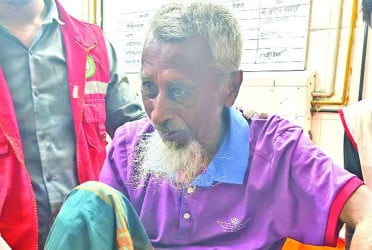
Abdus Sadeque, an immortal icon and the country's first national hockey captain, breathed his last at a Gulshan hospital on Saturday morning following a year-long battle with cancer.
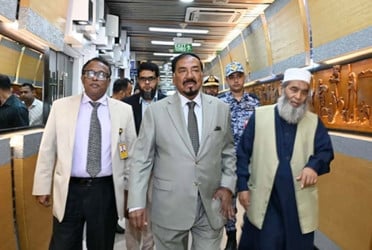
As he embarked on his final journey to eternal peace, a grieving nation bid a tearful farewell to one of its greatest sporting sons.
Born on 18 September, 1946, in Dhaka, his journey began on the historic grounds in Armanitola Government High School, which is widely considered as the cradle of hockey in the country.
Sadeque became one of its most legendary alumni, helping to popularise the sport across the then-East Pakistan.
Though predominantly known as a hockey maestro, Sadeque's brilliance was beautifully multifaceted.
During the 1960s, he reigned across three disciplines.
His football journey commenced in 1965 with Azad Sporting, followed by two years at Victoria, and a stint with Dilkusha in 1969.
Playing as a "stopper" in defence, he rose swiftly to the upper echelons of the contemporary sporting scene.
In hockey, his true passion shone brightest.
Alongside friends like Sabbir Yusuf and Pratap Shankar Hazra, he founded the "Combined Hockey Club" in 1965, a team that utterly dominated the Dhaka Hockey League with consecutive titles until 1969.
Following an internal disagreement, Sadeque joined Ispahani Club, the very team that, at 1970, post-independence, evolved into the traditional Abahani hockey team in 1975.
As a centre-half in the East Pakistan hockey team, Sadeque was indispensable.
His talent got him Pakistan national hockey call up for the 1968 Olympics, though a cruel injury ultimately ruled him out.
However, his moment of international recognition arrived in 1969 when he became the sole Bengali player selected for Pakistan's tour of Europe.
Playing as a right-half, Sadeque featured in eight out of 20 matches against formidable opponents like Germany, Italy, Spain, France, Belgium, the Netherlands, and England.
Following the independence of Bangladesh, Sadeque played a pivotal role in establishing the foundation of domestic clubs and the national team.
In 1972, at the request of Sheikh Kamal, the eldest son of the then-President Sheikh Mujibur Rahman, Sadeque became the first captain of the newly-formed Abahani Krira Chakra for both its football and hockey teams.
In 1973, he captained the Comilla district team to the National Hockey Championship title, secured by a solitary goal from his younger brother, Ahmed Akbar Sobhan, who had previously played alongside him as a right-half in the East Pakistan youth team.
When the Bangladesh national hockey team embarked on its first official international testing tour to Sri Lanka in the 1977-78 season, Sadeque was the historic first official captain.
Upon hanging up his boots, Sadeque took full charge as head coach of the Abahani football team in 1977, and led them to a historic unbeaten championship in the Dhaka League.
In 1989, he coached the Bangladesh national team to championship victory in the President's Gold Cup. Sadeque's impact transcended the pitch and the dugout.
Serving as the General Secretary of the Bangladesh Hockey Federation from 1983 to 1985.
Through sheer diplomatic brilliance, he successfully relocated the 1985 Second Asia Cup from Japan to Bangladesh, firmly placing Dhaka on the global hockey map.
He was also instrumental in the successful hosting of the 2017 Asia Cup in Dhaka, and was the driving force behind the installation of modern electronic scoreboards and floodlights for hockey in the country.
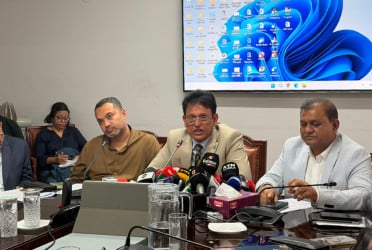
The sporting fraternity gathered to mourn the loss of this versatile genius.
His first namaz-e-janaza was held on Saturday after Asr prayers at the Baitus Sobhan Mosque in Bashundhara residential area.
A second janaza took place at 11:00am on Sunday at the Banani DOHS ground, after which the legendary figure will be laid to rest in eternal peace.