Japan has approved groundbreaking stem-cell treatments for Parkinson’s disease and severe heart failure, marking a major milestone in regenerative medicine. Officials and developers say the therapies could reach patients within months, reports AFP.
Pharmaceutical company Sumitomo Pharma announced that it had received approval to manufacture and sell Amchepry, a treatment for Parkinson's disease that involves transplanting stem-cell-derived cells into a patient’s brain.
Japan’s health ministry has also approved ReHeart, a therapy developed by medical startup Cuorips. The treatment uses sheets of heart muscle cells to help regenerate tissue, promote new blood vessel formation and improve heart function in patients with severe heart failure.
According to Japanese media reports, the therapies could reach the market and begin treating patients as early as this summer. If so, they would become the world’s first commercially available medical treatments based on Induced Pluripotent Stem Cells (iPS cells).
The technology was pioneered by Japanese scientist Shinya Yamanaka, who received the Nobel Prize in Physiology or Medicine in 2012 for his research demonstrating that mature cells can be reprogrammed into stem cells capable of developing into almost any cell type in the body.
Japan’s health minister Kenichiro Ueno expressed hope that the development would benefit patients globally.
“I hope this will bring relief to patients not only in Japan but around the world,” he said at a press conference, adding that authorities would complete the necessary procedures to ensure the treatment becomes widely available.
In a statement, Sumitomo Pharma said the government had granted “conditional and time-limited approval” for Amchepry under a regulatory system designed to speed up access to innovative regenerative therapies.
Under this framework, treatments can receive provisional approval based on early clinical data, provided their safety and potential effectiveness are demonstrated.
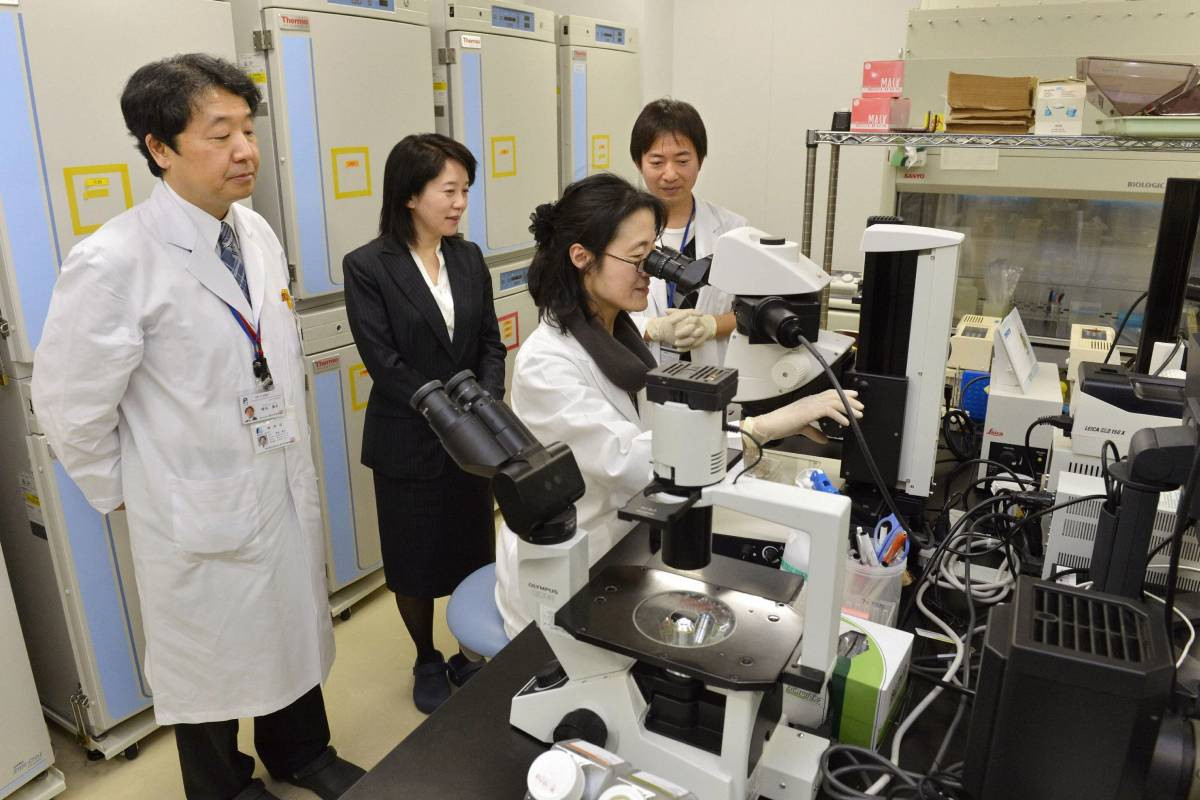
Clinical research led by scientists at Kyoto University suggested that the therapy was both safe and capable of improving symptoms.
The trial involved seven Parkinson’s patients aged between 50 and 69. Each patient received between five million and ten million stem-cell-derived dopamine precursor cells implanted into both sides of the brain.
The cells, derived from healthy donors, were engineered to develop into dopamine-producing neurons—cells that are progressively lost in patients with Parkinson’s disease.
Participants were monitored for two years following the procedure. Researchers reported no serious adverse effects, while four patients showed noticeable improvements in their symptoms.
Parkinson’s disease is a chronic and progressive neurological disorder that affects movement, often causing tremors, stiffness and difficulty with coordination.
According to the Parkinson's Foundation, around 10 million people worldwide are living with the condition. Current treatments primarily help manage symptoms but do not stop or reverse the progression of the disease.
Induced pluripotent stem cells are created by reprogramming mature cells back into an immature state, allowing them to develop into various types of specialised cells. Because the process does not require embryos, it has become one of the most promising and rapidly advancing areas of modern biomedical research.
Scientists believe the technology could eventually transform the treatment of a wide range of conditions, from neurodegenerative disorders to heart disease and organ damage.
Bd-pratidin English/ Jisan