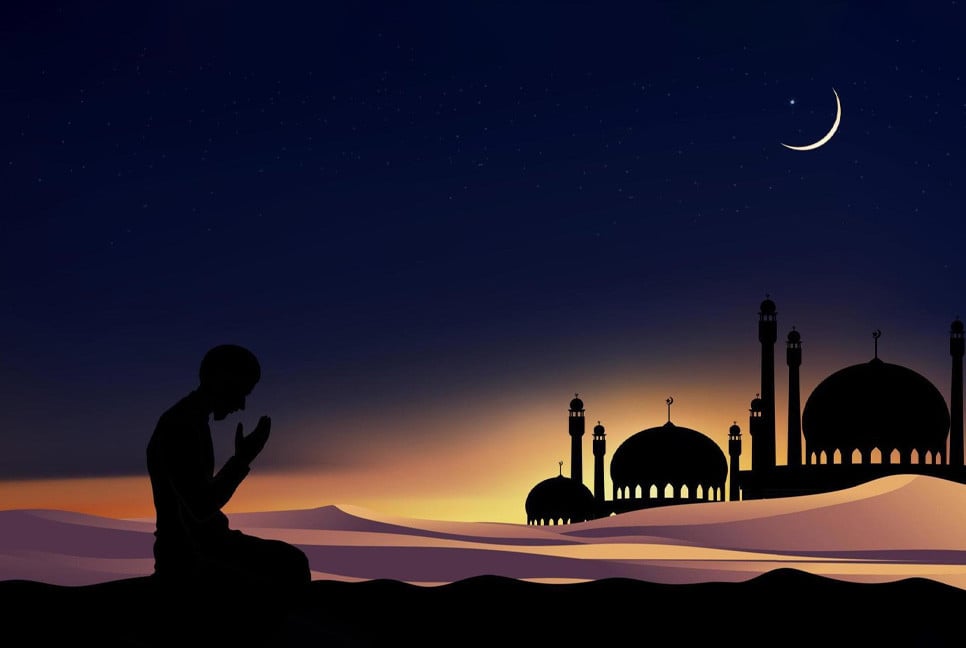
The holy month of Ramadan is knocking at the door. Muslims fasting this year will go through the ordeal for shorter hours than last year, which will bring relief to the devotees, reports Daily Sun.
Because the Islamic Hijri calendar follows the lunar cycle, with each month lasting 29 or 30 days depending on the crescent moon’s sighting, Ramadan shifts about 10 to 12 days earlier each year.
This annual shift directly influences fasting durations and how daylight hours change throughout the holy month.
Why fasting hours vary by location
Fasting hours vary from country to country, mainly due to differences in geography and latitude.
Muslims abstain from food, drink, and other physical indulgences from the first light of dawn until sunset, with the exact duration depending on the time of sunrise and sunset in each location.
In the MENA region, fasting hours remain moderate, as countries near the equator experience relatively balanced daylight.
In contrast, the farther north a country is, the longer the days, and therefore, the longer the fasting period. Conversely, locations farther south have shorter fasting hours due to shorter daylight.
As the month progresses, fasting hours will gradually increase by a few minutes, with the final days slightly longer than the beginning of the month.
Here’s a look at how fasting duration compares around the world, from the longest to the shortest this year:
Longest fasting hours
In far northern regions such as northern Russia, Greenland, and Iceland, Muslims are expected to experience some of the longest fasting hours in the world due to the high latitude.
Countries like Greenland, Iceland, Norway, Sweden and Finland will observe over 16 hours of fasting as they lie in the Northern Hemisphere and experience sunlight throughout the majority of their day.
Meanwhile, in some high-altitude regions of Sweden, Norway, Greenland, and northern Canada, fasts might even last up to 20 hours due to extreme daylight hours.
Special adjustments
To make things easier for Muslims living in areas where daylight lasts unusually long or where the sun barely sets, Islamic scholars gave the faithful the freedom to either:
Follow Makkah's timings and hence adopt the fastest hours observed in Islam's holy city, where day lengths remain moderate.
Follow the timetable of the nearest moderate city and follow the prayer and fasting schedule of the closest location with more balanced daylight hours.
Shortest fasting hours
Countries located closer to the equator or in the southern hemisphere experience shorter fasting hours due to earlier sunsets and more balanced daylight.
In parts of Brazil, Argentina, Uruguay, South Africa, Chile and New Zealand, fasting durations are typically around 11–13 hours. Muslims in equatorial regions (such as Indonesia, Malaysia, and Kenya) will enjoy relatively consistent but shorter fasts of about 12–14 hours.
Bd-Pratidin English/ AM